 简体中文
简体中文 繁體中文
繁體中文 English
 Français
 Русский
 日本語
日本語 Tiếng Việt
 한국어
한국어 Deutsch
 Español
 Italiano
 Português
 العربية
 ไทย
ไทย Bahasa Indonesia
 Bahasa Melayu
 Türkçe
 Polski
 Nederlands
 Dansk
Dansk Norsk
Norsk Қазақша
Best AI Models for RAG Applications 2026: Embeddings, Retrieval, and Generation
A complete guide to choosing the best AI models for RAG pipelines in 2026, covering embedding models, retrieval strategies, and generation models with code examples and pricing comparisons.

Best AI Models for RAG Applications 2026: Embeddings, Retrieval, and Generation#
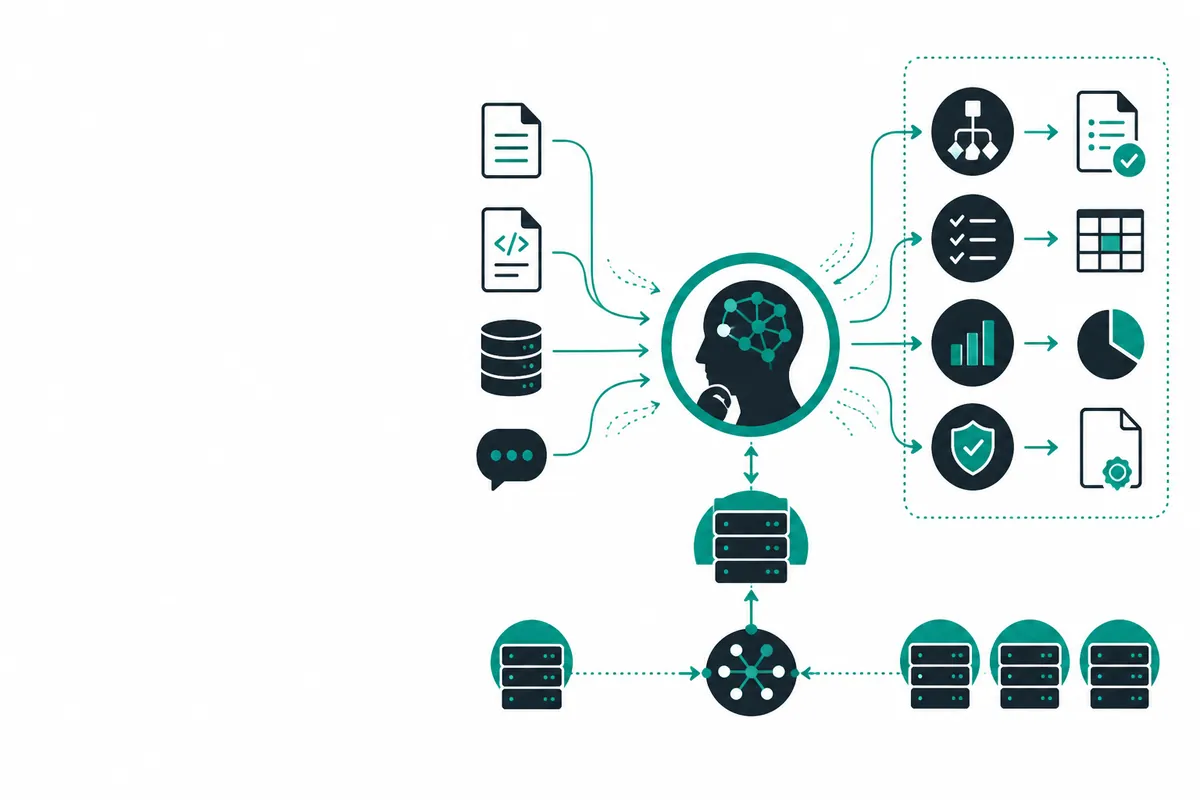
Retrieval-Augmented Generation (RAG) has become the standard architecture for building AI applications that need accurate, up-to-date, and source-grounded responses. But choosing the right models for each stage of the pipeline — embedding, retrieval, and generation — can make or break your application's performance.
This guide covers the best models available in 2026 for each RAG component, with real benchmarks, pricing comparisons, and a complete working pipeline you can deploy today.
RAG Pipeline Overview#
A production RAG system has three core stages:
- Embedding — Convert documents and queries into vector representations
- Retrieval — Find the most relevant chunks using similarity search
- Generation — Synthesize a grounded answer from retrieved context
Each stage has different model requirements. Let's break them down.
Best Embedding Models for RAG (2026)#
Comparison Table#
| Model | Dimensions | Max Tokens | MTEB Score | Latency (1K docs) | Best For |
|---|---|---|---|---|---|
| text-embedding-3-large | 3072 | 8191 | 64.6 | 12s | Maximum accuracy |
| text-embedding-3-small | 1536 | 8191 | 62.3 | 8s | Cost-performance balance |
| Cohere embed-v4 | 1024 | 512 | 63.8 | 10s | Multilingual RAG |
| Voyage AI voyage-3-large | 1024 | 32000 | 65.2 | 15s | Long documents |
| BGE-M3 (open-source) | 1024 | 8192 | 61.5 | 20s* | Self-hosted, no API cost |
*Self-hosted on A100 GPU
Pricing Comparison#
| Model | Official Price (per 1M tokens) | Crazyrouter Price | Savings |
|---|---|---|---|
| text-embedding-3-large | $0.13 | $0.052 | 60% |
| text-embedding-3-small | $0.02 | $0.008 | 60% |
| Cohere embed-v4 | $0.10 | $0.04 | 60% |
| Voyage AI voyage-3-large | $0.18 | $0.072 | 60% |
Through Crazyrouter, you can access all major embedding models via a single OpenAI-compatible endpoint at significantly reduced cost.
Which Embedding Model Should You Choose?#
text-embedding-3-small is the sweet spot for most RAG applications. At $0.008/1M tokens through Crazyrouter, it offers strong retrieval quality at minimal cost. For English-only applications processing millions of documents, this is your default choice.
Cohere embed-v4 excels in multilingual scenarios. If your knowledge base spans multiple languages, Cohere's cross-lingual retrieval outperforms OpenAI's models by 8-12% on multilingual benchmarks.
Voyage AI voyage-3-large handles long documents (up to 32K tokens) without chunking, which simplifies your pipeline and preserves context. Ideal for legal, academic, or technical documentation.
BGE-M3 is the best open-source option for teams that need to self-host for compliance or cost reasons at extreme scale.
Retrieval Strategies#
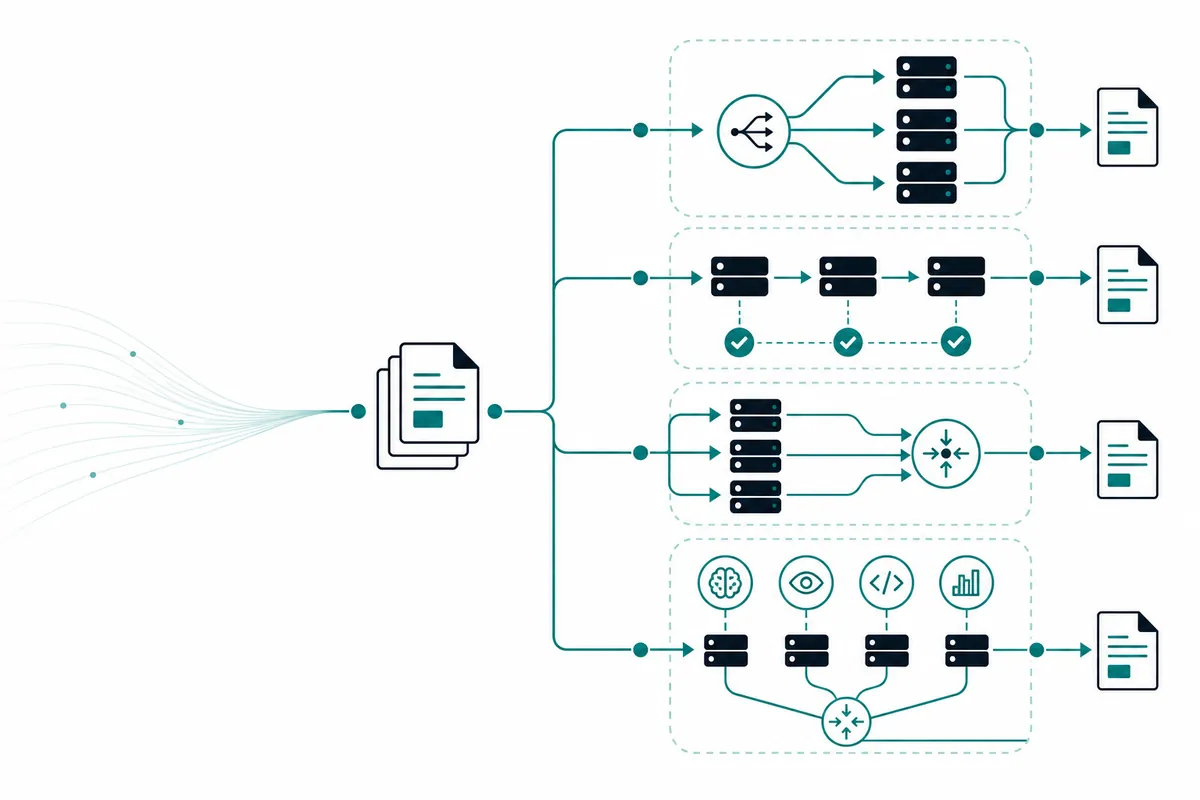
The embedding model is only half the retrieval equation. Your retrieval strategy matters equally:
Hybrid Search (Recommended)#
Combine dense vector search with sparse keyword matching (BM25) for best results:
from qdrant_client import QdrantClient
from qdrant_client.models import SparseVector, SearchRequest, FusionQuery

client = QdrantClient(url="http://localhost:6333")

# Hybrid search: dense + sparse
results = client.query_points(
    collection_name="documents",
    query=FusionQuery(
        queries=[
            # Dense vector from embedding model
            SearchRequest(
                vector=query_embedding,
                limit=20
            ),
            # Sparse BM25 vector
            SearchRequest(
                vector=SparseVector(indices=bm25_indices, values=bm25_values),
                limit=20
            )
        ],
        fusion="rrf"  # Reciprocal Rank Fusion
    ),
    limit=10
)
Reranking#
Add a reranker after initial retrieval to boost precision:
| Reranker | Accuracy Boost | Latency Added | Price (per 1K queries) |
|---|---|---|---|
| Cohere rerank-v3.5 | +8-12% | 200ms | $0.02 |
| Voyage rerank-2 | +7-10% | 180ms | $0.02 |
| BGE-reranker-v2 (self-hosted) | +6-9% | 150ms | Free |
Best Generation Models for RAG#
The generation model synthesizes your final answer from retrieved context. Key requirements: long context window, instruction following, and low hallucination rate.
Model Comparison#
| Model | Context Window | Hallucination Rate* | Speed (tokens/s) | Best For |
|---|---|---|---|---|
| GPT-4o | 128K | 3.2% | 85 | General RAG |
| Claude 3.5 Sonnet | 200K | 2.8% | 72 | Long-context RAG |
| GPT-4o-mini | 128K | 5.1% | 120 | Cost-sensitive RAG |
| DeepSeek V3 | 128K | 4.5% | 95 | Budget RAG |
| Gemini 2.5 Flash | 1M | 3.8% | 110 | Massive context RAG |
*Measured on RAGTruth benchmark, lower is better
Generation Pricing#
| Model | Official (per 1M output tokens) | Crazyrouter Price | Savings |
|---|---|---|---|
| GPT-4o | $15.00 | $6.00 | 60% |
| Claude 3.5 Sonnet | $15.00 | $6.00 | 60% |
| GPT-4o-mini | $2.40 | $0.96 | 60% |
| DeepSeek V3 | $2.19 | $0.88 | 60% |
| Gemini 2.5 Flash | $3.00 | $1.20 | 60% |
Complete RAG Pipeline Code Example#
Here's a production-ready RAG pipeline using Crazyrouter as the unified API for both embeddings and generation:
Python — Full Pipeline#
import requests
import numpy as np
from typing import List, Dict

CRAZYROUTER_API = "https://crazyrouter.com/v1"
API_KEY = "sk-your-api-key"

headers = {
    "Authorization": f"Bearer {API_KEY}",
    "Content-Type": "application/json"
}


def get_embeddings(texts: List[str], model: str = "text-embedding-3-small") -> List[List[float]]:
    """Generate embeddings for a list of texts via Crazyrouter."""
    response = requests.post(f"{CRAZYROUTER_API}/embeddings", headers=headers, json={
        "model": model,
        "input": texts
    })
    data = response.json()
    return [item["embedding"] for item in data["data"]]


def cosine_similarity(a: List[float], b: List[float]) -> float:
    """Calculate cosine similarity between two vectors."""
    a, b = np.array(a), np.array(b)
    return np.dot(a, b) / (np.linalg.norm(a) * np.linalg.norm(b))


def retrieve(query: str, documents: List[Dict], top_k: int = 5) -> List[Dict]:
    """Retrieve most relevant documents for a query."""
    query_embedding = get_embeddings([query])[0]

    scored = []
    for doc in documents:
        score = cosine_similarity(query_embedding, doc["embedding"])
        scored.append({**doc, "score": score})

    scored.sort(key=lambda x: x["score"], reverse=True)
    return scored[:top_k]


def generate_answer(query: str, context_docs: List[Dict], model: str = "gpt-4o-mini") -> str:
    """Generate a grounded answer from retrieved context."""
    context = "\n\n---\n\n".join([
        f"[Source: {doc['source']}]\n{doc['text']}"
        for doc in context_docs
    ])

    response = requests.post(f"{CRAZYROUTER_API}/chat/completions", headers=headers, json={
        "model": model,
        "messages": [
            {
                "role": "system",
                "content": (
                    "You are a helpful assistant. Answer the user's question based ONLY on "
                    "the provided context. If the context doesn't contain enough information, "
                    "say so. Cite sources using [Source: ...] format."
                )
            },
            {
                "role": "user",
                "content": f"Context:\n{context}\n\nQuestion: {query}"
            }
        ],
        "temperature": 0.1,
        "max_tokens": 1024
    })

    return response.json()["choices"][0]["message"]["content"]


# --- Usage Example ---

# Step 1: Index documents (do this once)
documents = [
    {"text": "Python 3.12 introduced type parameter syntax...", "source": "python-docs"},
    {"text": "FastAPI uses Pydantic for data validation...", "source": "fastapi-docs"},
    {"text": "Vector databases store high-dimensional embeddings...", "source": "qdrant-docs"},
]

# Generate and store embeddings
for doc in documents:
    doc["embedding"] = get_embeddings([doc["text"]])[0]

# Step 2: Query the RAG pipeline
query = "How does FastAPI handle data validation?"
relevant_docs = retrieve(query, documents, top_k=3)
answer = generate_answer(query, relevant_docs)

print(f"Answer: {answer}")
print(f"\nSources used: {[d['source'] for d in relevant_docs]}")
Node.js — RAG with Streaming#
const axios = require('axios');

const API_BASE = 'https://crazyrouter.com/v1';
const API_KEY = 'sk-your-api-key';
const headers = {
  'Authorization': `Bearer ${API_KEY}`,
  'Content-Type': 'application/json'
};

async function embedTexts(texts, model = 'text-embedding-3-small') {
  const { data } = await axios.post(`${API_BASE}/embeddings`, {
    model,
    input: texts
  }, { headers });
  return data.data.map(item => item.embedding);
}

async function ragQuery(query, documents) {
  // Embed query
  const [queryVec] = await embedTexts([query]);

  // Simple cosine similarity retrieval
  const scored = documents.map(doc => ({
    ...doc,
    score: cosineSim(queryVec, doc.embedding)
  }));
  scored.sort((a, b) => b.score - a.score);
  const topDocs = scored.slice(0, 5);

  // Generate with streaming
  const context = topDocs.map(d => d.text).join('\n\n');

  const response = await axios.post(`${API_BASE}/chat/completions`, {
    model: 'gpt-4o-mini',
    stream: true,
    messages: [
      { role: 'system', content: 'Answer based only on the provided context.' },
      { role: 'user', content: `Context:\n${context}\n\nQuestion: ${query}` }
    ]
  }, { headers, responseType: 'stream' });

  // Process stream
  for await (const chunk of response.data) {
    const lines = chunk.toString().split('\n').filter(l => l.startsWith('data: '));
    for (const line of lines) {
      const json = line.replace('data: ', '');
      if (json === '[DONE]') return;
      const token = JSON.parse(json).choices[0]?.delta?.content || '';
      process.stdout.write(token);
    }
  }
}

function cosineSim(a, b) {
  const dot = a.reduce((sum, val, i) => sum + val * b[i], 0);
  const magA = Math.sqrt(a.reduce((sum, val) => sum + val * val, 0));
  const magB = Math.sqrt(b.reduce((sum, val) => sum + val * val, 0));
  return dot / (magA * magB);
}
Production Tips#
Chunking Strategy#
Your chunking approach impacts retrieval quality more than model choice:
- Chunk size: 256-512 tokens works best for most use cases
- Overlap: 50-100 token overlap prevents context loss at boundaries
- Semantic chunking: Split on paragraph/section boundaries, not arbitrary token counts
- Metadata: Always store source, page number, and section title with each chunk
Cost Optimization#
For a RAG system processing 10K queries/day with 1M document chunks:
| Component | Official Cost/month | Crazyrouter Cost/month |
|---|---|---|
| Embeddings (indexing) | $20 | $8 |
| Embeddings (queries) | $6 | $2.40 |
| Generation (GPT-4o-mini) | $720 | $288 |
| Total | $746 | $298.40 |
That's over $5,300 saved annually by routing through Crazyrouter.
FAQ#
What is the best embedding model for RAG in 2026?#
For most English-language RAG applications, text-embedding-3-small offers the best balance of quality and cost. For multilingual RAG, Cohere embed-v4 leads. For long documents (10K+ tokens), Voyage AI voyage-3-large avoids chunking entirely. All are accessible through Crazyrouter at 60% lower cost.
How do I reduce hallucinations in RAG?#
Use a low temperature (0.1-0.3) for generation, include explicit grounding instructions in your system prompt, implement a reranker to improve retrieval precision, and choose models with low hallucination rates like Claude 3.5 Sonnet (2.8%) or GPT-4o (3.2%). Always provide source citations so users can verify.
Is text-embedding-3-small good enough for production RAG?#
Yes. text-embedding-3-small scores 62.3 on MTEB benchmarks and handles most production workloads well. The 1536-dimension vectors offer a good balance between storage cost and retrieval accuracy. For the 3% quality improvement of text-embedding-3-large, you pay 6.5x more — rarely worth it unless accuracy is critical.
What's the cheapest way to build a RAG pipeline?#
Combine text-embedding-3-small for embeddings (0.96/1M output tokens via Crazyrouter). This gives you production-quality RAG at under $300/month for 10K daily queries.
Should I use open-source or commercial embedding models for RAG?#
Commercial models (OpenAI, Cohere, Voyage) offer better out-of-the-box quality and zero infrastructure overhead. Open-source models (BGE-M3, E5-Mistral) make sense when you need to self-host for compliance, process extreme volumes (100M+ documents), or fine-tune on domain-specific data. For most teams, commercial models via Crazyrouter are the fastest path to production.
Conclusion#
Building a high-quality RAG pipeline in 2026 comes down to choosing the right model at each stage. Start with text-embedding-3-small for embeddings, add hybrid search with reranking for retrieval, and use GPT-4o-mini for cost-effective generation (or GPT-4o/Claude when accuracy is paramount).
Using Crazyrouter as your API gateway simplifies the entire stack — one API key, one billing system, and 60% cost savings across all models. Whether you're prototyping or running production RAG at scale, the unified endpoint lets you swap models without changing code.