 简体中文
简体中文 繁體中文
繁體中文 English
 Français
 Русский
 日本語
日本語 Tiếng Việt
 한국어
한국어 Deutsch
 Español
 Italiano
 Português
 العربية
 ไทย
ไทย Bahasa Indonesia
 Bahasa Melayu
 Türkçe
 Polski
 Nederlands
 Dansk
Dansk Norsk
Norsk Қазақша
Codex CLI Installation Guide 2026: Reproducible Nix, Containers, and CI
Install Codex CLI reproducibly across developer machines and CI with version pinning, isolated credentials, and container checks.
Codex CLI Installation Guide 2026: Reproducible Nix, Containers, and CI#
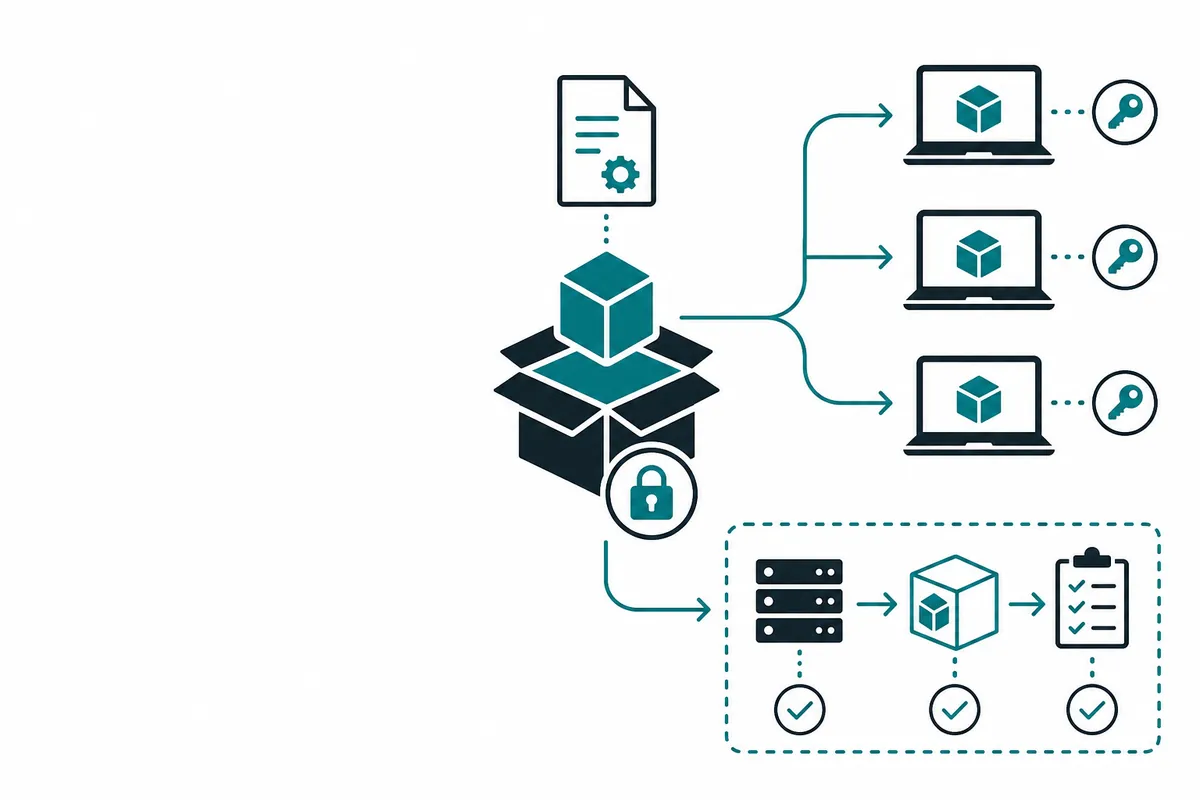
Codex CLI installation becomes harder when a team needs the same version on macOS, Linux, a devcontainer, and a CI runner. The reliable approach is to pin the runtime, separate interactive credentials from automation credentials, and test the command in a clean environment before onboarding the whole team.
What is this topic?#
For developers, this topic sits at the intersection of model capability, API integration, and operating cost. The right implementation is not the one with the most impressive demo; it is the one that produces acceptable results repeatedly, exposes failures clearly, and stays within a known budget. Start by defining the task, the success metric, the maximum latency, and the data boundary.
Codex CLI Installation Guide 2026: Reproducible Nix, Containers, and CI vs alternatives#
A native installation is fastest for an individual developer. A devcontainer provides a stable toolchain for teams. Nix or another lockfile-based system improves reproducibility, while CI should use a minimal image and a short-lived credential. Do not assume that a local shell configuration is safe or portable in automation.
A useful decision rule is simple: choose the smallest model or tool that passes your evaluation set. Keep a premium path for difficult cases, but do not send every request through the most expensive option. Log the model, prompt version, latency, token or media usage, retry count, and final reviewer outcome. This turns a subjective comparison into an engineering decision.
How to use it with an API#
The examples below use an OpenAI-compatible shape. Replace the model identifier with the exact name shown in the current Crazyrouter model catalog, keep the key on a server, and add timeouts plus structured error handling in production.
# Reproducible container smoke test
set -euo pipefail
node --version
python3 --version
codex --version

# Keep credentials outside the image
[ -n "${CODEX_API_KEY:-}" ]
# Never print CODEX_API_KEY
For production, add an idempotency key to asynchronous jobs, validate user input before submission, and persist the provider response. A failed request should be classified as a transient transport error, a rate limit, an invalid parameter, a policy rejection, or a permanent input failure. Only the first category should be retried automatically, and retries need exponential backoff with a hard cap.
Pricing breakdown#
The CLI itself may be free or bundled depending on the current product plan, while model usage can still create variable cost. Separate seat or subscription spend from API fallback spend. Crazyrouter can be used for compatible API workloads when you want a single endpoint for multiple models, but Codex CLI support depends on the CLI integration path you choose.
| Cost dimension | Official provider route | Crazyrouter route |
|---|---|---|
| Authentication | Provider account and key | Crazyrouter account and key |
| Billing | Provider's current unit price | Current routed model price |
| Model choice | Provider-specific | Supported multi-model catalog |
| Fallbacks | Usually application-managed | Can be centralized with policy |
| Best for | First-party features | Comparison, routing, and one API surface |
Do not copy a historical price into a long-lived budget. Recheck the official pricing page and the Crazyrouter pricing page before launch. The number that matters is effective cost per successful task: total spend divided by accepted outputs, including retries and rejected generations.
Implementation checklist#
- Define a small representative evaluation set before changing providers.
- Keep credentials server-side and separate local, staging, production, and CI access.
- Set request, token, media-duration, concurrency, and monthly budget limits.
- Record model, version, latency, usage, retries, and outcome for every request.
- Add a cheaper first pass and a premium escalation path only when quality requires it.
- Review failures weekly and remove prompts or workflows that create avoidable retries.
FAQ#
What is the easiest Codex CLI installation path?#
Use the official package instructions for your platform, then verify the version and run a non-destructive smoke test.
Should teams pin Codex CLI versions?#
Yes. Pin versions in development images and upgrade through a small canary group.
Can Codex CLI run in CI?#
It can when the workflow is non-interactive, credentials are injected securely, and commands have time, cost, and file-scope limits.
How do I troubleshoot installation?#
Check PATH, runtime versions, executable permissions, proxy settings, and whether the runner architecture is supported.
Can I combine Codex CLI with other models?#
Use a gateway or application-level routing layer for tasks that need model fallback or cost-based selection.
Summary#
The practical way to evaluate codex cli installation, Codex CLI setup 2026, Codex CLI CI is to combine capability, reliability, and effective cost. Build a small test set, keep the integration observable, and make budget and fallback decisions explicit. If you want to compare supported models behind one developer-friendly interface, visit Crazyrouter.