 中文
中文 English
 Français
 Русский
 日本語
日本語 Tiếng Việt
 한국어
한국어 Deutsch
 Español
 Italiano
 Português
 العربية
 ไทย
ไทย Bahasa Indonesia
 Bahasa Melayu
 Türkçe
 Polski
 Nederlands
 Dansk
Dansk Norsk
Norsk Қазақша
Qwen2.5-Omni Guide 2026: Real-Time Voice, Vision, and Agent Workflows
A hands-on Qwen2.5-Omni guide for developers building real-time multimodal apps with voice, vision, tool calling, and production routing.
Qwen2.5-Omni Guide 2026: Real-Time Voice, Vision, and Agent Workflows#
Qwen2.5-omni guide is a high-intent topic because people searching it usually want four answers at once: what the product is, how it compares, how to use it, and whether the pricing makes sense. Most articles only solve one of those. This guide takes a more practical developer path: define the product, compare it to alternatives, show working code, break down pricing, and end with a realistic architecture recommendation for 2026.
What is Qwen2.5-Omni?#
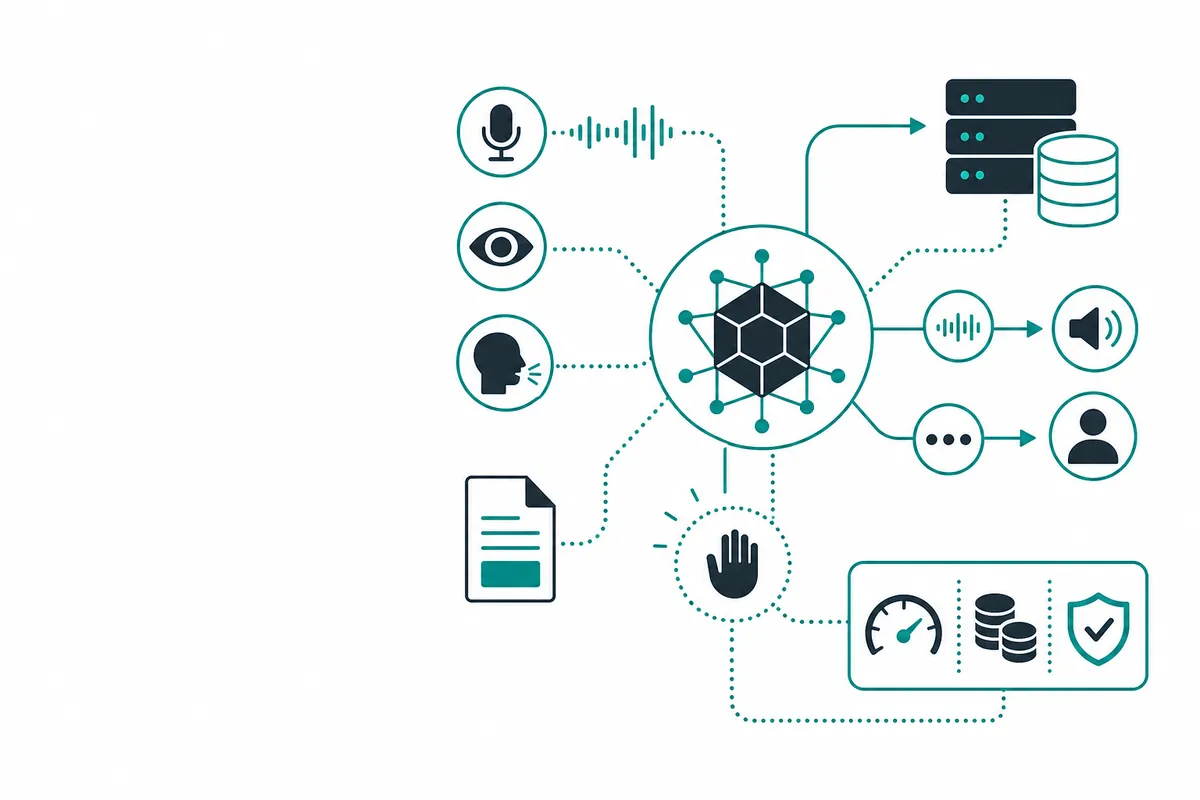
Qwen2.5-Omni is Alibaba's multimodal model family aimed at handling text, images, and voice-style interactions in one pipeline. The reason developers care is simple: a single model that can see, listen, classify, and answer reduces orchestration overhead. Instead of running separate OCR, ASR, and text models, you can often prototype a unified path first and optimize later.
For individual users, this may look like a simple tooling choice. For teams, it is really an architecture question:
- Can we standardize authentication?
- Can we control spend as usage grows?
- Can we switch models without rewriting the app?
- Can we support CI, scripts, and production traffic with the same integration style?
- Can we benchmark alternatives instead of guessing?
That is why more engineering teams are moving from “pick one favorite model” to “treat models as interchangeable infrastructure.”
Qwen2.5-Omni vs alternatives#
Compared with Gemini multimodal, GPT vision, and realtime assistants, Qwen2.5-Omni is most useful when its strengths align with your actual workflow rather than generic internet hype.
| Option | Pricing Model | Best For |
|---|---|---|
| Qwen2.5-Omni | Multimodal open-ish ecosystem option | Good for cost-aware voice and vision apps |
| Gemini 2.5 Pro | Very strong long context multimodal model | Best for huge documents and broad reasoning |
| GPT vision stack | Mature SDKs and broad ecosystem | Strong if you already live in OpenAI tooling |
| Crazyrouter multi-model routing | One-key access | Lets you test Qwen against Gemini, Claude, and GPT without separate billing rails |
A better evaluation method is to create a benchmark set from your real work: bug triage, API docs summarization, code review comments, support classification, structured JSON extraction, and migration planning. Run the same tasks across multiple models and score quality, latency, and cost. That tells you far more than social-media anecdotes.
How to use Qwen2.5-Omni with code examples#
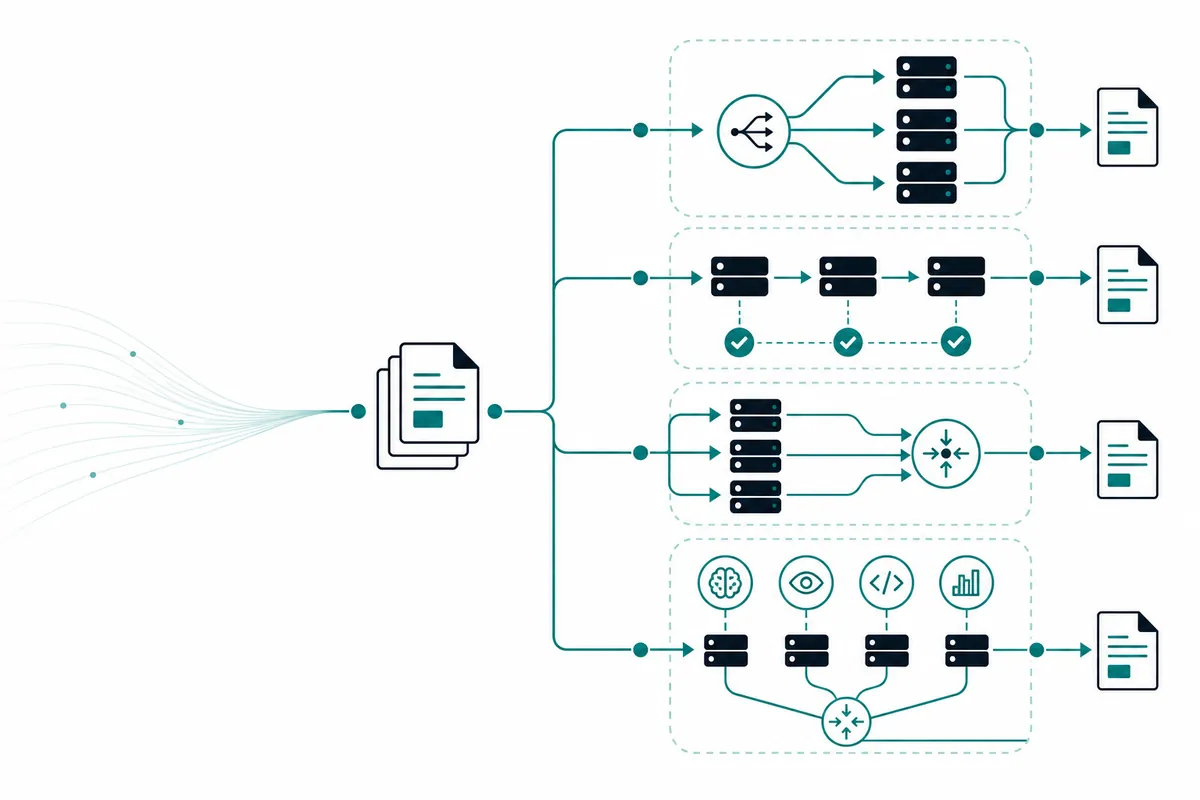
In practice, it helps to separate your architecture into two layers:
- Interaction layer: CLI, product UI, cron jobs, internal tools, CI, or support bots
- Model layer: which model gets called, when fallback happens, and how you enforce cost controls
If you hardwire business logic to one provider, migrations become painful. If you keep a unified interface through Crazyrouter, you can switch between Claude, GPT, Gemini, DeepSeek, Qwen, GLM, Kimi, and others with much less friction.
cURL example#
curl https://crazyrouter.com/v1/chat/completions \
  -H "Content-Type: application/json" \
  -H "Authorization: Bearer YOUR_CRAZYROUTER_KEY" \
  -d '{
    "model": "qwen2.5-omni",
    "messages": [
      {
        "role": "user",
        "content": [
          {"type": "text", "text": "Describe the image and suggest a spoken response for the user."},
          {"type": "image_url", "image_url": {"url": "https://example.com/room.jpg"}}
        ]
      }
    ]
  }'
Python example#
from openai import OpenAI

client = OpenAI(api_key="YOUR_CRAZYROUTER_KEY", base_url="https://crazyrouter.com/v1")

resp = client.chat.completions.create(
    model="qwen2.5-omni",
    messages=[
        {
            "role": "user",
            "content": [
                {"type": "text", "text": "Read this screenshot and extract the checkout total and CTA."},
                {"type": "image_url", "image_url": {"url": "https://example.com/checkout.png"}}
            ]
        }
    ]
)
print(resp.choices[0].message.content)
Node.js example#
import OpenAI from "openai";

const client = new OpenAI({
  apiKey: process.env.CRAZYROUTER_API_KEY,
  baseURL: "https://crazyrouter.com/v1"
});

const resp = await client.chat.completions.create({
  model: "qwen2.5-omni",
  messages: [{
    role: "user",
    content: [
      { type: "text", text: "Turn this support screenshot into a structured JSON bug report." },
      { type: "image_url", image_url: { url: "https://example.com/bug.png" } }
    ]
  }]
});

console.log(resp.choices[0].message.content);
For production, a few habits matter more than the exact SDK:
- route cheap tasks to cheaper models first
- escalate only hard cases to expensive reasoning models
- keep prompts versioned
- log failures and create a small eval set
- centralize key management and IP restrictions
Pricing breakdown: official routes vs Crazyrouter#
Every search around this topic eventually becomes a pricing question. Not just “how much does it cost,” but “what cost shape do I want?”
| Option | Cost Model | Best For |
|---|---|---|
| Single-provider multimodal stack | Varies by vendor and endpoint | Can be complex when you split OCR, STT, and LLM calls |
| Qwen on Crazyrouter | Pay-as-you-go | Useful for quick experiments and unified billing |
| Gemini multimodal direct | Usage-based | Excellent for large-context media reasoning |
| GPT multimodal direct | Usage-based | Strong tooling, often higher enterprise familiarity |
For solo experimentation, direct vendor access is often enough. For teams, the economics change quickly. Multiple keys, multiple invoices, different SDK styles, and no consistent fallback strategy create both cost and operational drag. A unified gateway like Crazyrouter is attractive because it gives you:
- one API key for many providers
- one billing surface
- lower vendor lock-in
- simpler model benchmarking
- an easier path from prototype to production
It also matters that Crazyrouter is not only for text models. If your roadmap may expand into image, video, audio, or multimodal workflows, keeping that infrastructure unified early is usually the calmer move.
FAQ#
What is Qwen2.5-Omni best for?#
Fast multimodal prototypes, voice-and-vision assistants, UI understanding, and workflows where you want one model to handle multiple media types.
Is Qwen2.5-Omni better than Gemini?#
Not universally. Gemini is stronger for massive context and some complex reasoning. Qwen can be more attractive when cost and flexibility matter.
Do I still need separate OCR or STT services?#
Sometimes no for prototypes, but at scale you may still split specialized tasks for latency or quality reasons.
Why route Qwen through Crazyrouter?#
Because you can benchmark Qwen against Gemini, GPT, and Claude from the same integration surface.
Summary#
If you are evaluating qwen2.5-omni guide, the most practical advice is simple:
- do not optimize for hype alone
- test with your own task set
- separate model access from business logic
- prefer flexible routing over hard vendor lock-in
If you want one key for Claude, GPT, Gemini, DeepSeek, Qwen, GLM, Kimi, Grok, and more, take a look at Crazyrouter. For developer teams, that is often the fastest way to keep optionality while controlling cost.