Crazyrouter
Claude Opus 4.5 vs GPT-5.2 - Which AI Model Should You Choose in 2026
A comprehensive comparison of Anthropic's Claude Opus 4.5 and OpenAI's GPT-5.2. Learn the strengths, weaknesses, and best use cases for each model.
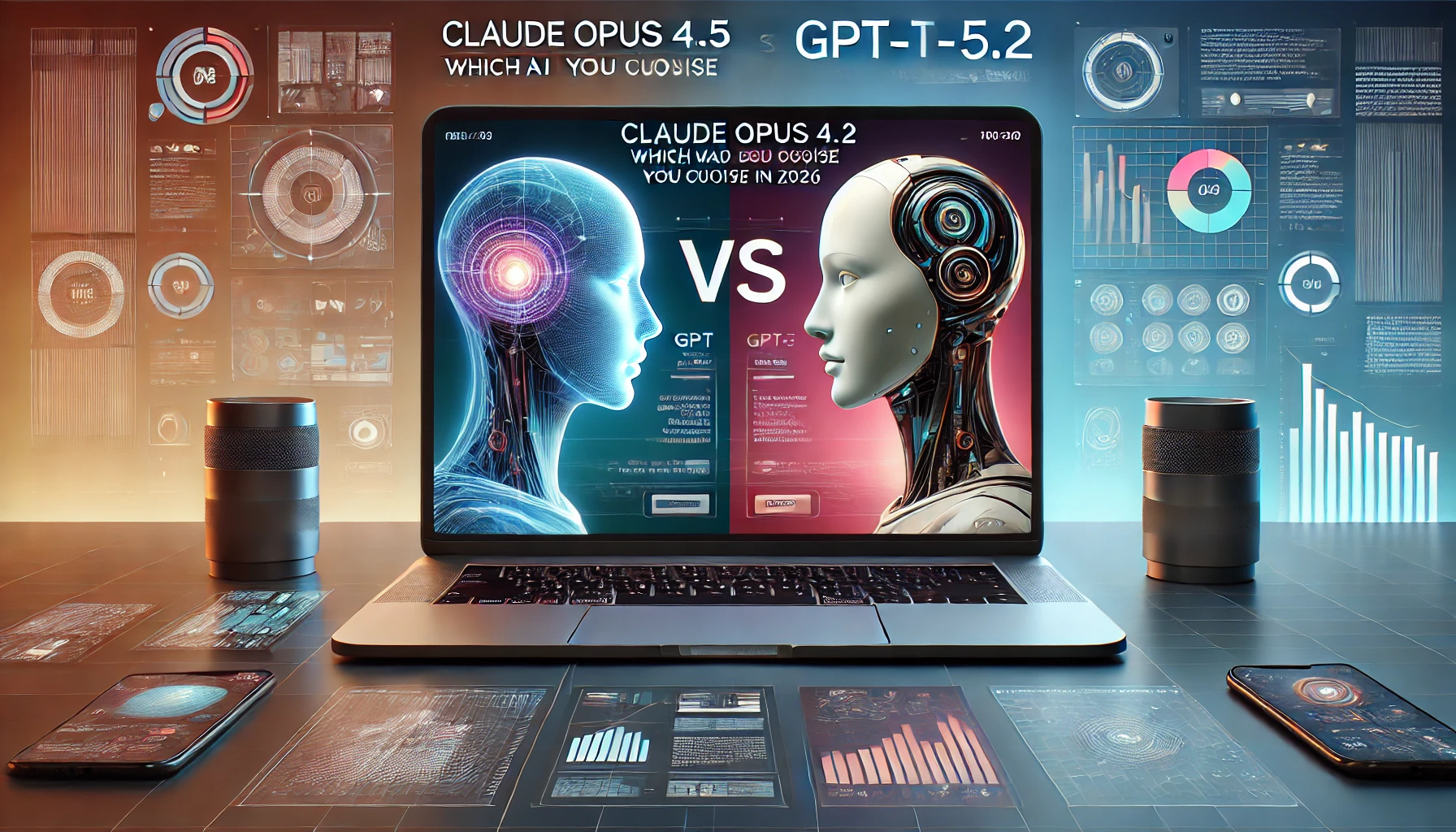
Choosing between Claude Opus 4.5 and GPT-5.2 can be challenging. Both are frontier AI models with exceptional capabilities. This guide compares them across key dimensions to help you make the right choice.
Model Overview#
Claude Opus 4.5 (claude-opus-4-5-20251101)#
Anthropic's most capable model, featuring:
- Extended context window (200K tokens)
- Superior code generation and analysis
- Strong reasoning with transparency
- Constitutional AI safety approach
- Thinking mode for complex reasoning
GPT-5.2 (gpt-5.2)#
OpenAI's flagship model, offering:
- Multimodal capabilities (text, image, audio)
- Advanced function calling
- Broad knowledge base
- Excellent creative writing
- Search API integration
Head-to-Head Comparison#
| Feature | Claude Opus 4.5 | GPT-5.2 |
|---|---|---|
| Input Price ($/1M) | $15.00 | $1.75 |
| Output Price ($/1M) | $75.00 | $14.00 |
| Context Window | 200K tokens | 128K tokens |
| Code Generation | Excellent | Excellent |
| Creative Writing | Very Good | Excellent |
| Reasoning | Excellent | Excellent |
| Multimodal | Text + Images | Text + Images + Audio |
Complete Claude Model Family#
Crazyrouter supports the full Claude lineup:
| Model | Input ($/1M) | Output ($/1M) | Use Case |
|---|---|---|---|
| claude-opus-4-5-20251101 | $15.00 | $75.00 | Most capable |
| claude-opus-4-1-20250805 | $15.00 | $75.00 | High performance |
| claude-opus-4-20250514 | $15.00 | $75.00 | Stable release |
| claude-sonnet-4-5-20250929 | $3.00 | $15.00 | Balanced |
| claude-sonnet-4-20250514 | $3.00 | $15.00 | Fast, efficient |
| claude-haiku-4-5-20251001 | $1.00 | $5.00 | Quick, low cost |
Code Examples#
Using Claude Opus 4.5#
from openai import OpenAI

client = OpenAI(
    api_key="sk-your-api-key",
    base_url="https://crazyrouter.com/v1",
    default_headers={
        "User-Agent": "Mozilla/5.0 (Windows NT 10.0; Win64; x64) AppleWebKit/537.36"
    }
)

response = client.chat.completions.create(
    model="claude-opus-4-5-20251101",
    messages=[
        {"role": "system", "content": "You are an expert software architect."},
        {"role": "user", "content": "Design a microservices architecture for an e-commerce platform."}
    ],
    max_tokens=4000
)

print(response.choices[0].message.content)
Using Claude with Thinking Mode#
response = client.chat.completions.create(
    model="claude-opus-4-5-20251101-thinking",
    messages=[
        {"role": "user", "content": "Analyze this complex algorithm and suggest optimizations."}
    ]
)
Using GPT-5.2#
response = client.chat.completions.create(
    model="gpt-5.2",
    messages=[
        {"role": "system", "content": "You are an expert software architect."},
        {"role": "user", "content": "Design a microservices architecture for an e-commerce platform."}
    ],
    max_tokens=4000
)

print(response.choices[0].message.content)
When to Choose Claude Opus 4.5#
Best for:
- Long document analysis (200K context)
- Complex code review and generation
- Tasks requiring step-by-step reasoning
- Applications needing transparent AI decisions
- Enterprise compliance requirements
Example use case - Code Review:
response = client.chat.completions.create(
    model="claude-opus-4-5-20251101",
    messages=[
        {"role": "user", "content": """Review this code for security vulnerabilities:

def login(username, password):
    query = f"SELECT * FROM users WHERE username='{username}' AND password='{password}'"
    result = db.execute(query)
    return result
"""}
    ]
)
When to Choose GPT-5.2#
Best for:
- Multimodal applications (text + audio)
- Creative content generation
- Conversational AI assistants
- Applications requiring function calling
- Real-time search integration
Example use case - Search API:
response = client.chat.completions.create(
    model="gpt-5-search-api",
    messages=[{"role": "user", "content": "What are the latest AI developments today?"}]
)
Pricing Comparison#
| Model | Input ($/1M) | Output ($/1M) |
|---|---|---|
| claude-opus-4-5-20251101 | $15.00 | $75.00 |
| gpt-5.2 | $1.75 | $14.00 |
| claude-sonnet-4-5-20250929 | $3.00 | $15.00 |
| gpt-5-mini | $0.25 | $2.00 |
| claude-haiku-4-5-20251001 | $1.00 | $5.00 |
| gpt-5-nano | $0.05 | $0.40 |
Pricing Disclaimer: The prices shown in this article are for demonstration purposes only and may change at any time. Actual billing will be based on the real-time prices displayed when you make your request.
Recommendation Summary#
| Scenario | Recommended Model |
|---|---|
| Code generation & review | Claude Opus 4.5 |
| Creative writing | GPT-5.2 |
| Long document analysis | Claude Opus 4.5 |
| Audio applications | GPT-5.2 |
| Cost-sensitive projects | GPT-5-mini or Claude Haiku |
| Complex reasoning | Either (both excellent) |
Try Both Models#
The best way to decide is to test both models with your specific use case:
models = ["claude-opus-4-5-20251101", "gpt-5.2"]
prompt = "Your test prompt here"

for model in models:
    response = client.chat.completions.create(
        model=model,
        messages=[{"role": "user", "content": prompt}]
    )
    print(f"\n=== {model} ===")
    print(response.choices[0].message.content)
Getting Started#
- Sign up at Crazyrouter
- Get your API key from the console
- Use the OpenAI-compatible endpoint
- Switch between models by changing the
modelparameter
For questions, contact support@crazyrouter.com