 简体中文
简体中文 繁體中文
繁體中文 English
 Français
 Русский
 日本語
日本語 Tiếng Việt
 한국어
한국어 Deutsch
 Español
 Italiano
 Português
 العربية
 ไทย
ไทย Bahasa Indonesia
 Bahasa Melayu
 Türkçe
 Polski
 Nederlands
 Dansk
Dansk Norsk
Norsk Қазақша
Gemini 2.5 Flash and Flash-Lite for High-RPM APIs: Why Throughput and Low Cost Matter in Production
A production-oriented guide to using gemini-2.5-flash and gemini-2.5-flash-lite for high-RPM, high-concurrency, cost-sensitive AI workloads through Crazyrouter.

Gemini 2.5 Flash and Flash-Lite for High-RPM APIs#
For many production AI applications, the best model is not simply the strongest model on a benchmark. It is the model that can handle high request volume, keep latency predictable, and keep cost under control.
Anonymized Production Context#
This article is based on an anonymized production pattern. We will call it application A: a workload with continuous traffic, high concurrency, short-to-medium tasks, and strong cost sensitivity. No user ID, exact request volume, spending, timestamp window, logs, or identifiable business details are included.
Current Availability and Pricing Snapshot#
At the time of publication, Crazyrouter lists both models with OpenAI-compatible and Gemini endpoint support:
| Model | supported_endpoint_types | public_endpoint_types |
|---|---|---|
gemini-2.5-flash | gemini, openai | gemini, openai |
gemini-2.5-flash-lite | gemini, openai | gemini, openai |
The pricing API snapshot returned these key fields:
| Model | model_ratio | completion_ratio | cache_ratio | cache_creation_ratio | discount |
|---|---|---|---|---|---|
gemini-2.5-flash-lite | 0.05 | 4 | 0.25 | 1.25 | 0.55 |
gemini-2.5-flash | 0.15 | 8.3333 | 0.2667 | 1.25 | 0.55 |
This is a pricing snapshot, not a permanent promise. Check the current pricing data before a large deployment.
Why RPM matters more than a single benchmark score#
A demo usually sends one request at a time. A production system sends bursts, background jobs, agent steps, retries, and user-triggered fan-out. Once that happens, rate limits, queueing, and retry amplification can matter more than a small quality difference on one prompt.
For high-concurrency systems, the core question becomes:
Can the API handle bursts?
Can unit cost stay low?
Can retries be controlled?
Can the application switch models without rewriting business logic?
Where Flash-Lite fits#
gemini-2.5-flash-lite is best treated as the high-frequency layer: classification, intent detection, short summaries, query rewriting, metadata extraction, lightweight moderation, and agent pre-processing.
Typical Flash-Lite tasks:
Text classification
Intent detection
Short summaries
Query rewriting
Tag extraction
Lightweight moderation
Agent pre-processing
Structured field extraction
Where Flash fits#
gemini-2.5-flash belongs one level above Flash-Lite. Use it for medium summaries, response drafts, longer context understanding, and generation tasks where quality matters more than the absolute lowest unit cost.
Typical Flash tasks:
Medium-length summaries
Response drafts
Longer context understanding
Content rewriting
User-facing answers
Lightweight code explanation
A practical routing pattern#
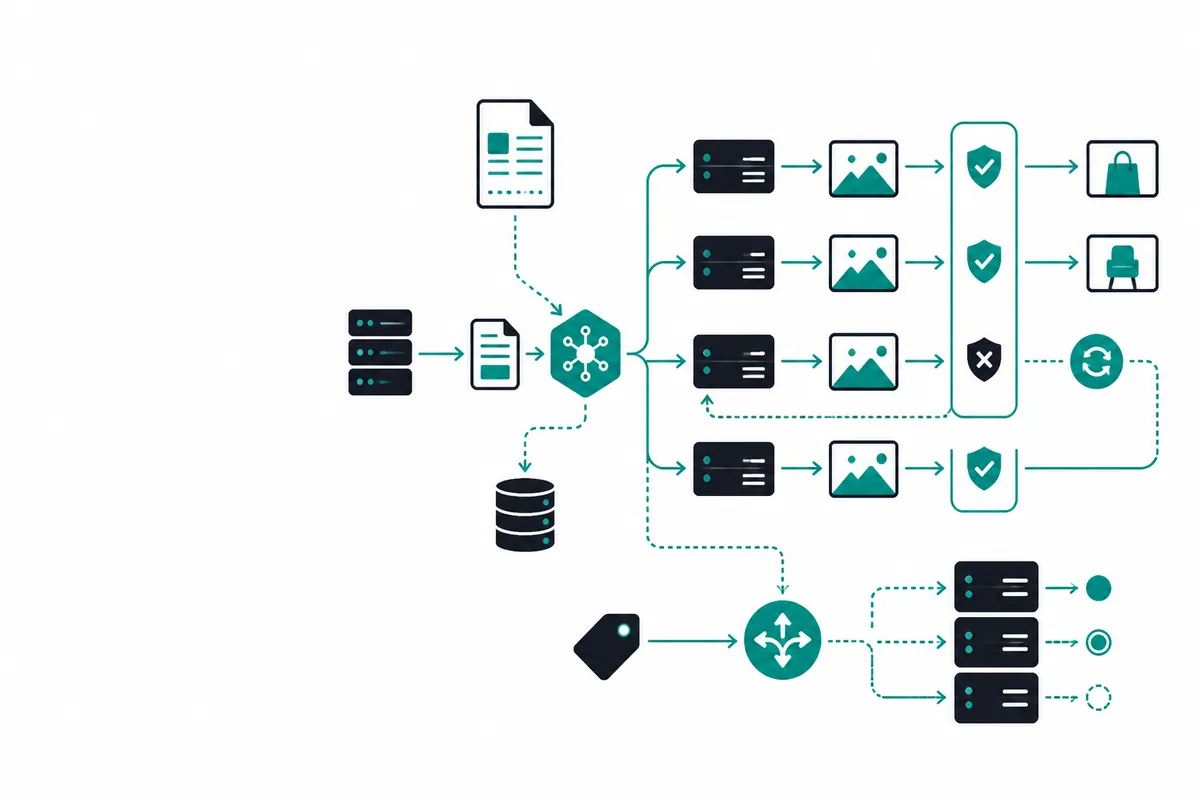
Use Flash-Lite for cheap, frequent, structured steps. Use Flash for medium-complexity user-facing answers. Reserve larger models for deep reasoning, long code, or high-risk decisions.
| Layer | Model choice | Purpose |
|---|---|---|
| High-frequency lightweight steps | gemini-2.5-flash-lite | Cheap structured processing |
| Medium generation tasks | gemini-2.5-flash | Better quality while staying cost-aware |
| Complex reasoning or long code | Larger specialist models | Use only where needed |
OpenAI-Compatible Request Example#
curl https://cn.crazyrouter.com/v1/chat/completions \
  -H "Authorization: Bearer $CRAZYROUTER_API_KEY" \
  -H "Content-Type: application/json" \
  -d '{
    "model": "gemini-2.5-flash-lite",
    "messages": [
      {
        "role": "system",
        "content": "You are a high-throughput classifier. Return JSON only."
      },
      {
        "role": "user",
        "content": "Classify this support message: I want to cancel my order but keep the coupon."
      }
    ],
    "temperature": 0.1,
    "max_tokens": 200
  }'
API endpoints should stay clean. For account setup, start from:
https://crazyrouter.com/register
What to Measure Before Scaling#
Before sending production traffic, measure:
Success rate
Average latency
P95 latency
429 / 5xx rate
Retry count
Token usage
Estimated cost per workflow
The cheapest model is not always the cheapest system. A low unit price only helps if the platform can keep throughput stable and retries under control.
Final Takeaway#
The practical takeaway: high-concurrency teams should evaluate model choice together with RPM, price, endpoint compatibility, retry behavior, and routing flexibility.