 中文
中文 English
 Français
 Русский
 日本語
日本語 Tiếng Việt
 한국어
한국어 Deutsch
 Español
 Italiano
 Português
 العربية
 ไทย
ไทย Bahasa Indonesia
 Bahasa Melayu
 Türkçe
 Polski
 Nederlands
 Dansk
Dansk Norsk
Norsk Қазақша
How to Get a Claude API Key in 2026: Production Setup, Rotation, and Team Access
Learn how to get a Claude API key safely in 2026, including account setup, secrets rotation, team access, and production best practices.
How to Get a Claude API Key in 2026: Production Setup, Rotation, and Team Access#
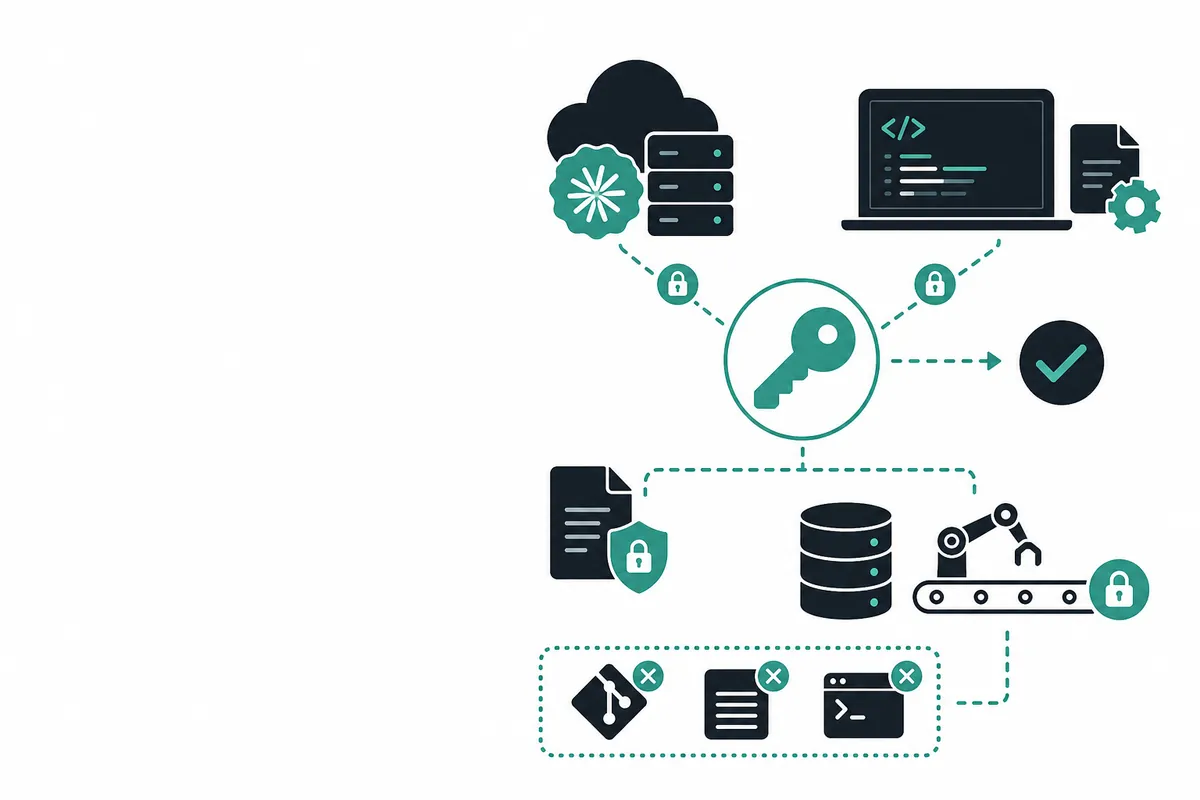
If you are searching for how to get a Claude API key, the basic answer is easy: create an Anthropic account, enable API access, and generate a key. The useful answer is more detailed. You also need to think about billing, security, team access, local development, and what happens when your first key leaks into a shell history or public repository.
This guide covers the full path from account creation to production-safe usage.
What is a Claude API key?#
A Claude API key is the credential that lets your app authenticate requests to Claude models. It is similar to other AI provider API tokens: whoever holds the key can spend against your account unless you layer on controls.
That makes the keyword how to get a Claude API key partly a signup question and partly a DevOps question.
Claude API key vs alternatives#
| Access path | Best for | Tradeoff |
|---|---|---|
| direct Anthropic key | teams committed to Anthropic | single-vendor dependency |
| per-project shared secret | quick internal tools | hard to audit over time |
| gateway API key | multi-model products | one more abstraction layer |
If you are only experimenting, the direct route is fine. If you are building production features, a unified gateway often gives you better observability and easier fallback.
How to get a Claude API key#
- Create or sign in to your Anthropic account.
- Enable billing or credits if required.
- Open the API or developer section.
- Generate a new key for your project or environment.
- Store it in a secrets manager, not in source code.
That is the official process in plain language. But the operational setup matters just as much.
How to use a Claude API key with code#
cURL example#
export ANTHROPIC_API_KEY="your_key_here"

curl https://crazyrouter.com/v1/messages           -H "Content-Type: application/json"           -H "x-api-key: YOUR_ANTHROPIC_API_KEY"           -H "anthropic-version: 2023-06-01"           -d '{
    "model": "claude-sonnet-4-5-20250929",
    "max_tokens": 800,
    "messages": [
      {"role": "user", "content": "Explain this stack trace and propose a fix."}
    ]
  }'
Python example#
import os
import anthropic

client = anthropic.Anthropic(
    api_key=os.environ["ANTHROPIC_API_KEY"],
    base_url="https://crazyrouter.com"
)

message = client.messages.create(
    model="claude-sonnet-4-5-20250929",
    max_tokens=800,
    messages=[
        {"role": "user", "content": "Refactor this retry function to avoid duplicate side effects."}
    ]
)

print(message.content[0].text)
Node.js example#
import Anthropic from "@anthropic-ai/sdk";

const client = new Anthropic({
  apiKey: process.env.ANTHROPIC_API_KEY,
  baseURL: "https://crazyrouter.com",
});

const resp = await client.messages.create({
  model: "claude-sonnet-4-5-20250929",
  max_tokens: 800,
  messages: [
    {
      role: "user",
      content: "Generate a checklist for safely migrating a legacy cron worker."
    }
  ]
});

console.log(resp.content[0].text);
Production checklist#
If your search intent is truly how to get a Claude API key for production, do these five things immediately:
- create separate keys for dev, staging, and production
- never commit keys to Git
- rotate secrets on a schedule
- add spend alerts and request logging
- limit which services can read the key
Many teams skip the last two, then discover the problem only after a cost spike.
Pricing breakdown: official key vs unified API key#
| Option | Cost model | Operational impact |
|---|---|---|
| official Claude API key | direct token billing | simple, but Anthropic-only |
| gateway key via Crazyrouter | token billing through one endpoint | easier cross-provider routing |
A direct Anthropic key is perfectly fine when Claude is your only provider. But once your app needs fallback to Gemini or GPT models, one gateway key can simplify deployment and incident response.
Crazyrouter is useful here because it gives teams a Claude-compatible workflow while also making room for multi-model routing later.
Common mistakes#
- Pasting the key directly into source files.
- Sharing one key across every engineer and every environment.
- Forgetting to rotate keys after employee or contractor changes.
- Logging full request headers in plaintext.
- Treating a local proof of concept like a production security model.
FAQ#
How do I get a Claude API key?#
Create an Anthropic account, enable API access, and generate the key in the developer console. Then store it securely in environment variables or a secrets manager.
Is a Claude API key free?#
The key itself may be easy to create, but API usage is billed. Check current credit and billing policies before launching production traffic.
Can I share one Claude API key with my whole team?#
You can, but you should not. It is better to use separate credentials by environment or service and track usage centrally.
What if I want Claude access plus fallback models?#
Use a unified API layer such as Crazyrouter. You keep a simple integration pattern and gain flexibility across providers.
Summary#
The search query how to get a Claude API key sounds basic, but the real work is making that key safe and scalable. Generate it, isolate it, rotate it, and monitor it from day one. If your roadmap includes more than one model provider, plan for that before you hard-code yourself into a single-vendor architecture.
For teams that want Claude access with cleaner multi-model operations, start with Crazyrouter.