 简体中文
简体中文 繁體中文
繁體中文 English
 Français
 Русский
 日本語
日本語 Tiếng Việt
 한국어
한국어 Deutsch
 Español
 Italiano
 Português
 العربية
 ไทย
ไทย Bahasa Indonesia
 Bahasa Melayu
 Türkçe
 Polski
 Nederlands
 Dansk
Dansk Norsk
Norsk Қазақша
Opus 4.8 vs Opus 4.7 Coding Test: What Changed for Developers?
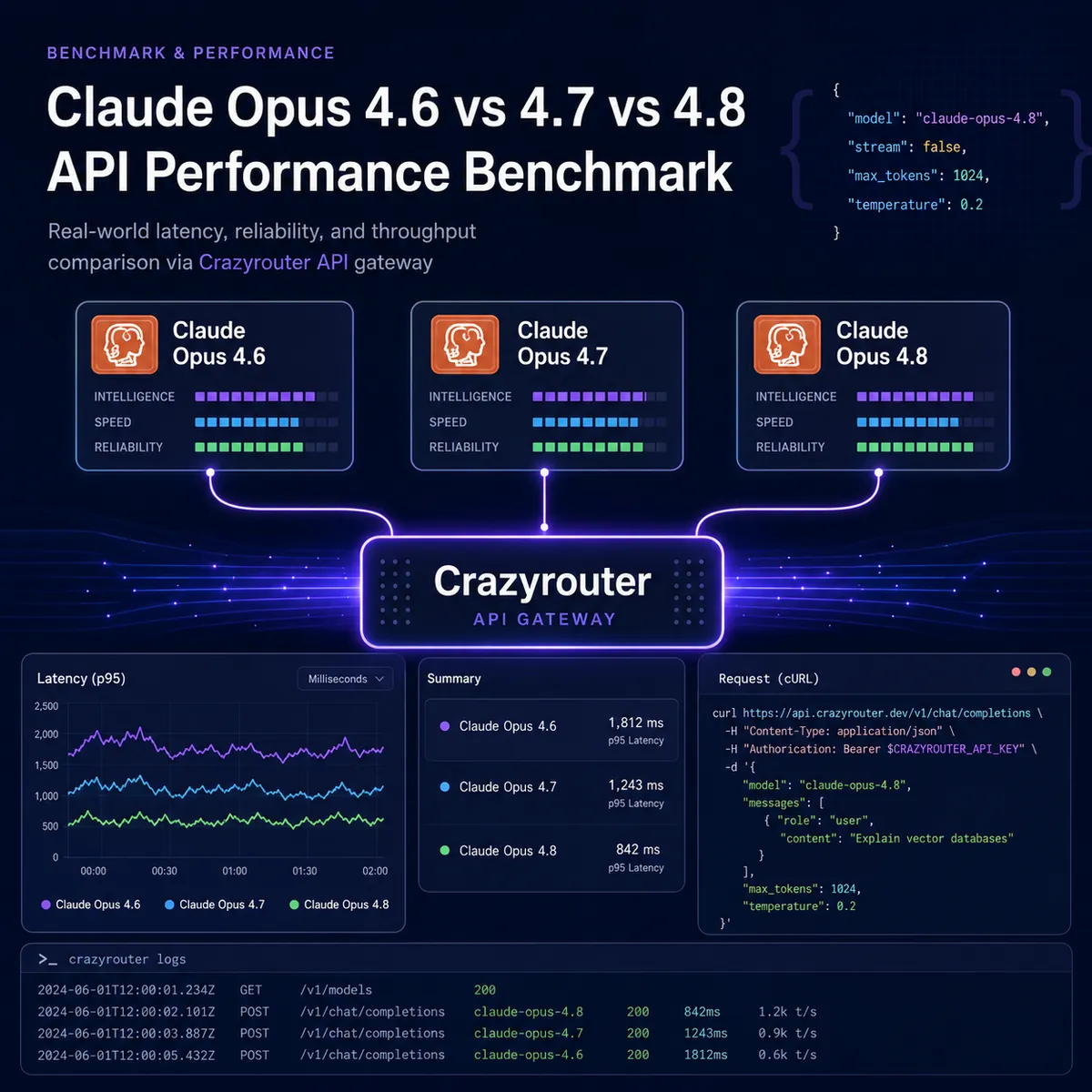
A focused look at the coding benchmark from our Opus 4.8 vs Opus 4.7 API test, including latency, output style, and production routing advice.

In our Claude Opus 4.8 vs Opus 4.7 benchmark, the coding task was intentionally simple but practical: implement a JavaScript topKFrequent(words, k) function with frequency sorting, lexical tie-breaking, edge cases, and better-than-O(n²) complexity.
Both models passed the coding test.
| Model | Latency | Result |
|---|---|---|
claude-opus-4-8 | 5.65s | Passed, used Map/counting, handled tie sort |
claude-opus-4-7 | 4.09s | Passed, used Map/counting, handled tie sort |
The interesting result#
Opus 4.7 was faster on this coding micro-benchmark. Opus 4.8 still produced a good solution, but this specific task did not show a coding-speed advantage for the newer model.
That is a useful reminder: model upgrades are not uniform across every task. A newer model can be better overall while an older route remains competitive for small deterministic coding tasks.
Practical recommendation#
For coding agents and developer tools:
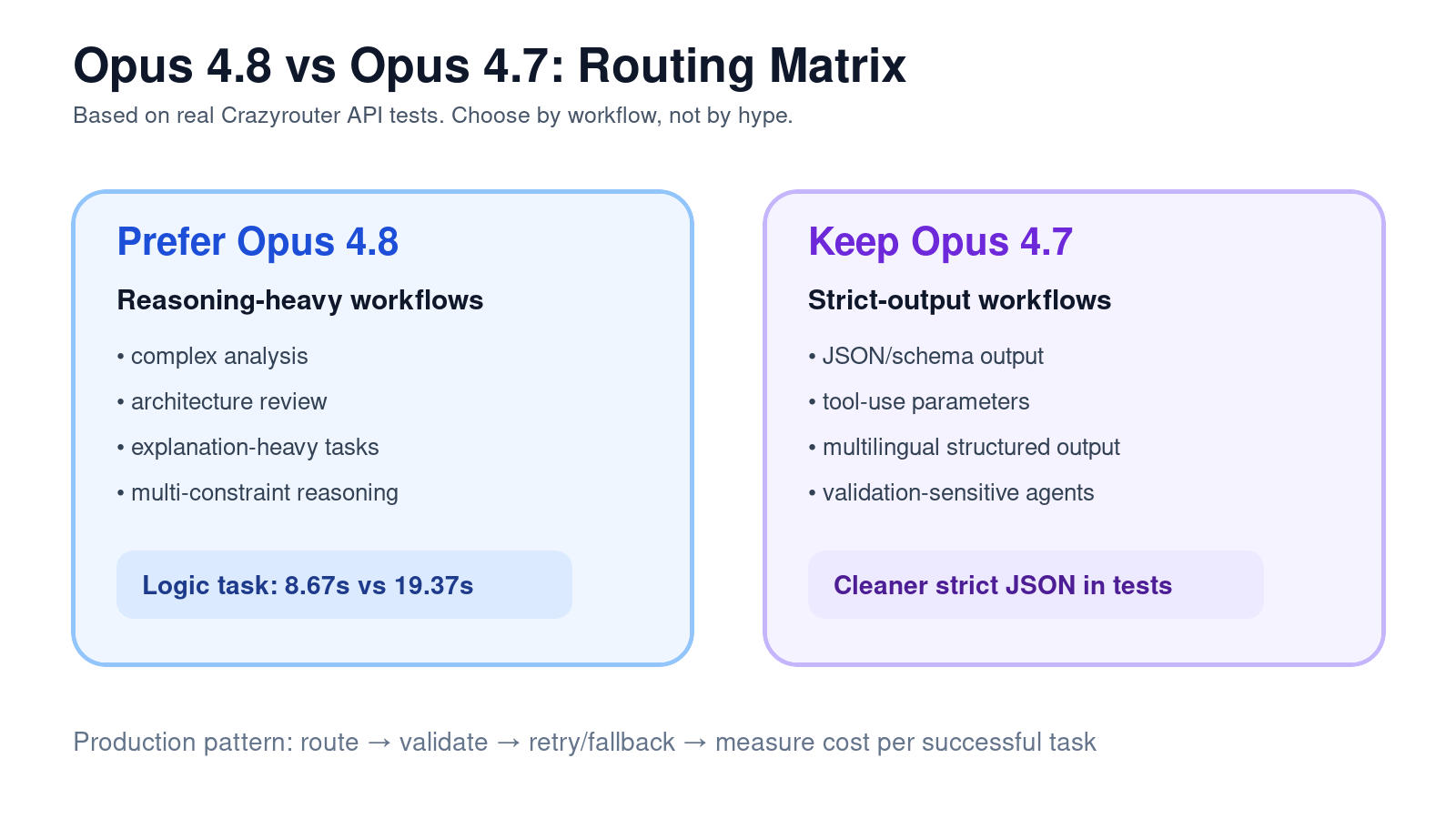
- use Opus 4.8 for harder reasoning, refactors, debugging, architectural review, and multi-file planning;
- keep Opus 4.7 as a strong fallback or cost/latency comparison route;
- evaluate on real repo tasks, not just toy coding prompts;
- measure accepted patches, test pass rate, and review effort.
If you are building coding workflows, Crazyrouter lets you run both model IDs behind the same OpenAI-compatible API and compare results without changing your application integration.
Run your own Opus coding benchmark on Crazyrouter