 简体中文
 繁體中文
 English
 Français
 Русский
 日本語
 Tiếng Việt
 한국어
 Deutsch
 Español
 Italiano
 Português
 العربية
 ไทย
 Bahasa Indonesia
 Bahasa Melayu
 Türkçe
 Polski
 Nederlands
 Dansk
 Norsk
 Қазақша
Try Qwen Image 2.0 online — generate an image, then call the API
Qwen Image 2.0 is available on Crazyrouter through the OpenAI-compatible images endpoint. Pay per image, no subscription, same key as your text models.
Use this model via API
This model is available through the paid API. Create an account, add funds and create an API key. The $2 Playground credit is for supported text models only, not API calls.
Sign up for API accessPaste the model ID, live price, base URL and a working request straight into your coding agent.
What is Qwen Image 2.0?
Qwen Image 2.0 is a Qwen Image image model from Alibaba for text-to-image generation and image editing. On Crazyrouter it shares an API key and balance with chat, video and audio models, so image generation slots into an existing integration without a second vendor account.

Same request and response shape as the OpenAI Images API; existing client code keeps working.
You are charged per generated image at the rate on this page, nothing else.
Where the upstream model supports it, pass reference images for editing and style transfer.
Mix image generation with chat, video and music models under one balance.
Qwen Image 2.0 API quickstart
POST to https://api.crazyrouter.com/v1/images/generations with model qwen-image-2.0. The response follows the OpenAI images schema (URL or base64).
curl https://api.crazyrouter.com/v1/images/generations \
  -H "Content-Type: application/json" \
  -H "Authorization: Bearer $CRAZYROUTER_API_KEY" \
  -d '{
    "model": "qwen-image-2.0",
    "prompt": "Product photo of a matte ceramic coffee mug on a light oak desk, soft morning window light, shallow depth of field, neutral background, commercial photography",
    "n": 1,
    "size": "1536x1024"
  }'
Best use cases
Works with developer tools
OpenAI SDKs
client.images.generate(model="qwen-image-2.0", prompt=...) against the Crazyrouter base URL.
n8n / Dify / Make
Use the HTTP node or the OpenAI-compatible connector with the Crazyrouter endpoint.
Custom backends
Plain HTTPS; no SDK required.
Crazyrouter playground
Try prompts in the console before writing code.
Qwen Image 2.0 FAQ
Which endpoint do I call?
https://api.crazyrouter.com/v1/images/generations with model set to qwen-image-2.0.
How is it billed?
Per generated image at the price shown on this page; failed generations are not charged.
Which sizes and formats are supported?
The upstream model's sizes and formats; pass size and response_format as documented by the vendor.
Can I edit an existing image?
If the upstream model supports edits, send reference images via the images edits endpoint or the image field.
Is there a rate limit?
Limits follow your account tier; contact support for higher throughput.
Guides and comparisons
 Comparison
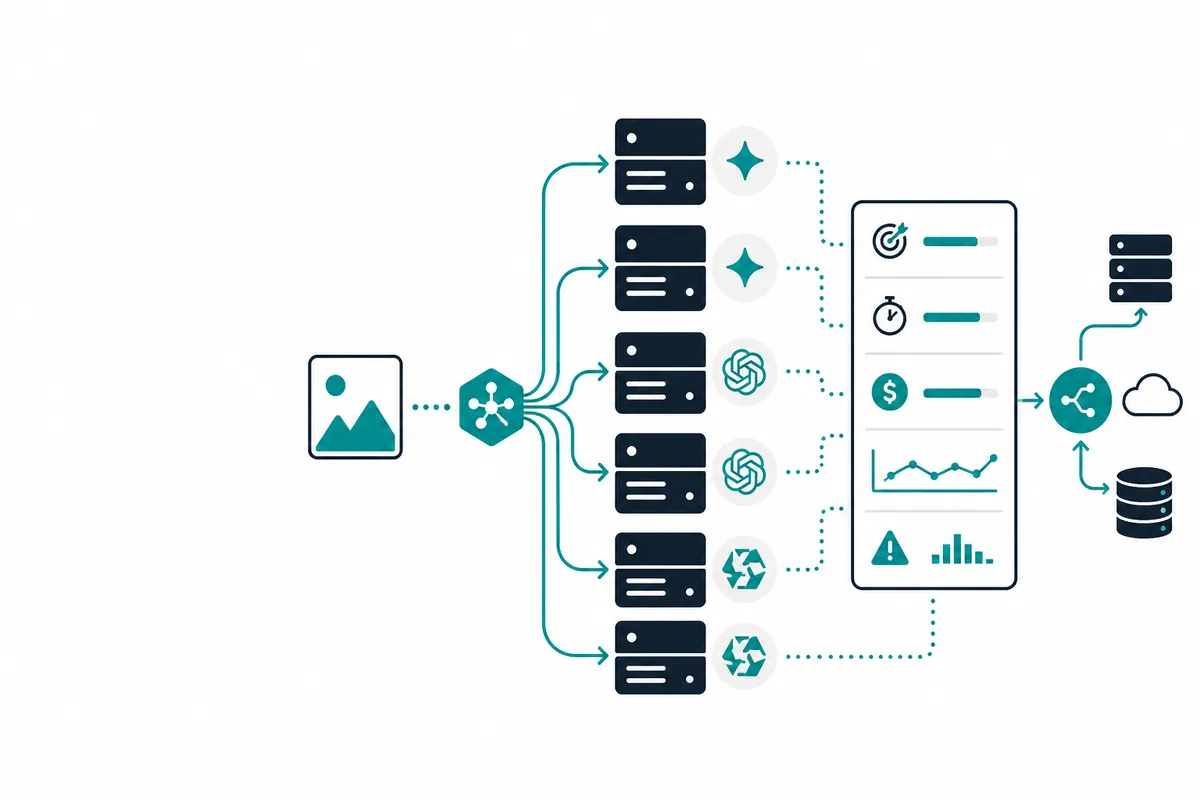
6 Vision API Models Tested: Gemini 2.5, GPT-4.1, and Qwen3 VL for Image Understanding
A practical benchmark of Gemini 2.5 Flash, Gemini 2.5 Flash Lite, GPT-4.1 Mini, GPT-4.1 Nano, Qwen3 VL Flash, and Qwen3 VL Plus for image understanding APIs, covering accuracy, lat
 Tutorial
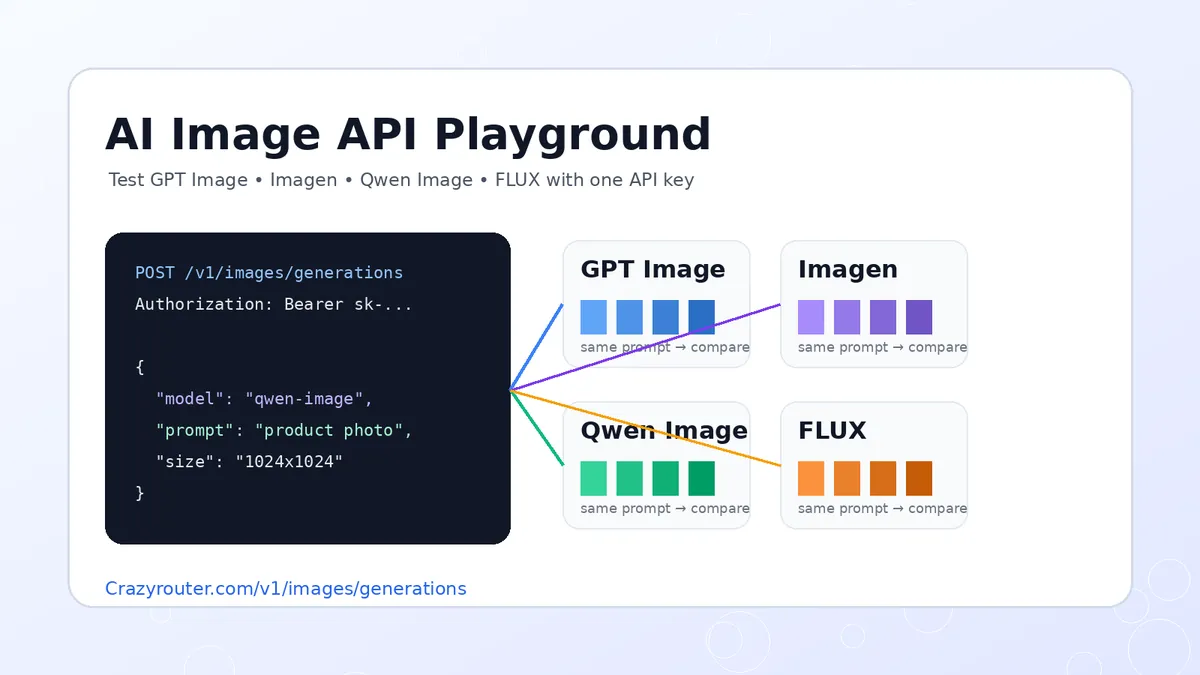
AI Image API Playground: Test GPT Image, Imagen, Qwen Image and FLUX Online
A practical guide for developers who need to compare AI image generation models before building production code. Learn how to test GPT Image, Imagen, Qwen Image, FLUX, and DALL-E s
 Tutorial
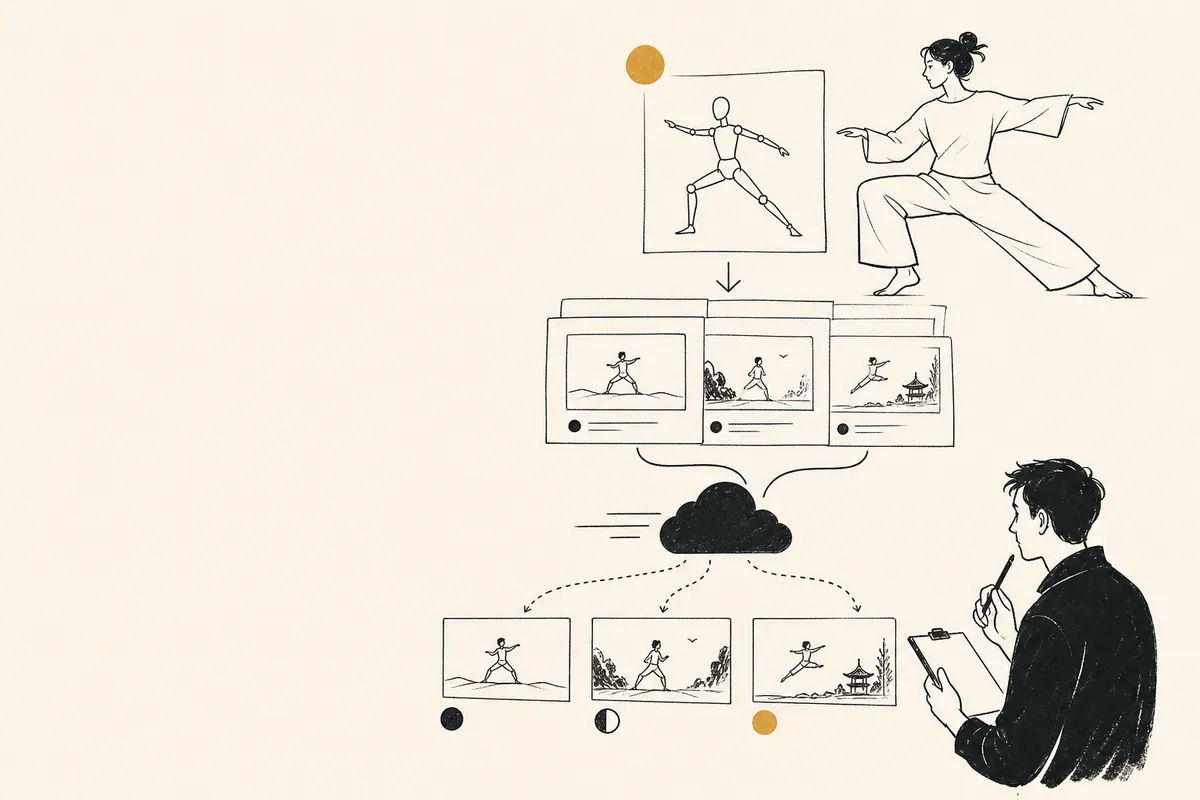
WAN 2.2 Animate Tutorial 2026: Reference Poses, Batch Jobs, and API QA
Learn a production-friendly WAN 2.2 Animate workflow for reference poses, shot manifests, asynchronous jobs, and visual QA.
Podcast
AI Dev Tools: The Crazyrouter Podcast
Short episodes for developers on AI APIs, gateways, cost control and coding tools.
Latest episodes
EP196 · Oct 29, 2026 · 6:53
AI API Security Posture — Turn Controls Into Continuous Evidence
A practical guide to AI API security posture: inventory exposure, verify controls continuously, protect keys and data, constrain tools, and turn security assumptions into evidence that operators can act on.
EP195 · Oct 28, 2026 · 7:21
AI API Policy Drift — Detect When Production Rules Stop Matching Intent
A practical guide to policy drift in AI APIs: version routing and safety rules, detect stale enforcement, compare intended and observed behavior, and restore control before small gaps become incidents.