 简体中文
 繁體中文
 English
 Français
 Русский
 日本語
 Tiếng Việt
 한국어
 Deutsch
 Español
 Italiano
 Português
 العربية
 ไทย
 Bahasa Indonesia
 Bahasa Melayu
 Türkçe
 Polski
 Nederlands
 Dansk
 Norsk
 Қазақша
Show notes
Why agent protocols matter now#
Anyone building with AI over the past several months has run into a growing list of acronyms: MCP, the Model Context Protocol; Google's Agent-to-Agent protocol, A2A; and ACP from IBM. These are not just names. They are competing visions for how AI agents talk to the outside world and to each other.
The choices teams make now will shape their architecture for years. The good news is that the two most prominent protocols, MCP and A2A, are less in conflict than the protocol wars framing suggests.
Understanding which layer each protocol occupies is the first step toward a strategy, and it changes the question from which one wins to how they fit together.
MCP: the tool integration layer#
Anthropic released MCP as an open standard, and the pitch is simple: USB-C for AI. It gives any AI application one standardized way to connect to external tools, data sources and workflows. Build an MCP server once, and any compatible client, such as Claude, ChatGPT, VS Code or Cursor, can use it.
Its core value is solving the N-times-M integration problem. Without a standard, ten AI apps and twenty tools need two hundred custom integrations. With MCP you build twenty servers and ten clients, and the protocol handles discovery, authentication and communication.
At the time of recording (May 2026), adoption had been fast: OpenAI added MCP support to ChatGPT, Microsoft built it into VS Code and Copilot, tools such as Cursor and Windsurf supported it natively, and community-built servers covered everything from GitHub and Slack to databases. MCP is built for one pattern, though: a client-server model where one AI application reaches out to many tools.
A2A: agents working with agents#
Google's A2A targets a different problem: collaboration between autonomous agents. Rather than one AI calling tools, A2A lets multiple agents discover each other, negotiate capabilities and coordinate on complex tasks. It is the difference between one developer using a wrench and a team of specialists working on a project together.
A2A describes each agent with an Agent Card, JSON metadata stating what the agent can do, what inputs it accepts and how to communicate with it. Agents discover one another, exchange messages and manage long-running tasks with built-in state management. The model is peer-to-peer rather than client-server.
Where MCP gives one brain many hands, A2A gives a team of brains a shared way to divide up work, hand off subtasks and track progress on tasks that run longer than a single request.
A stack, not a choice#
The practical answer to MCP versus A2A is that you will likely use both, because they work at different layers:
- Models at the bottom: GPT, Claude, Gemini, DeepSeek and others.
- MCP in the middle, connecting models to databases, APIs, search and other external systems.
- A2A on top, coordinating multiple agents into workflows.
A research agent gathers data, an analysis agent processes it, and a writing agent produces the report. Each may use MCP internally for its tools while coordinating with the others through A2A.
Four moves for developers building today#
- Adopt MCP now. The ecosystem is ready, and it can save months of custom integration work. Start with an official SDK in Python, TypeScript, Java or C#.
- Build composable agents. Even without A2A today, give each agent a clear capability boundary: what it does, what it needs and what it returns.
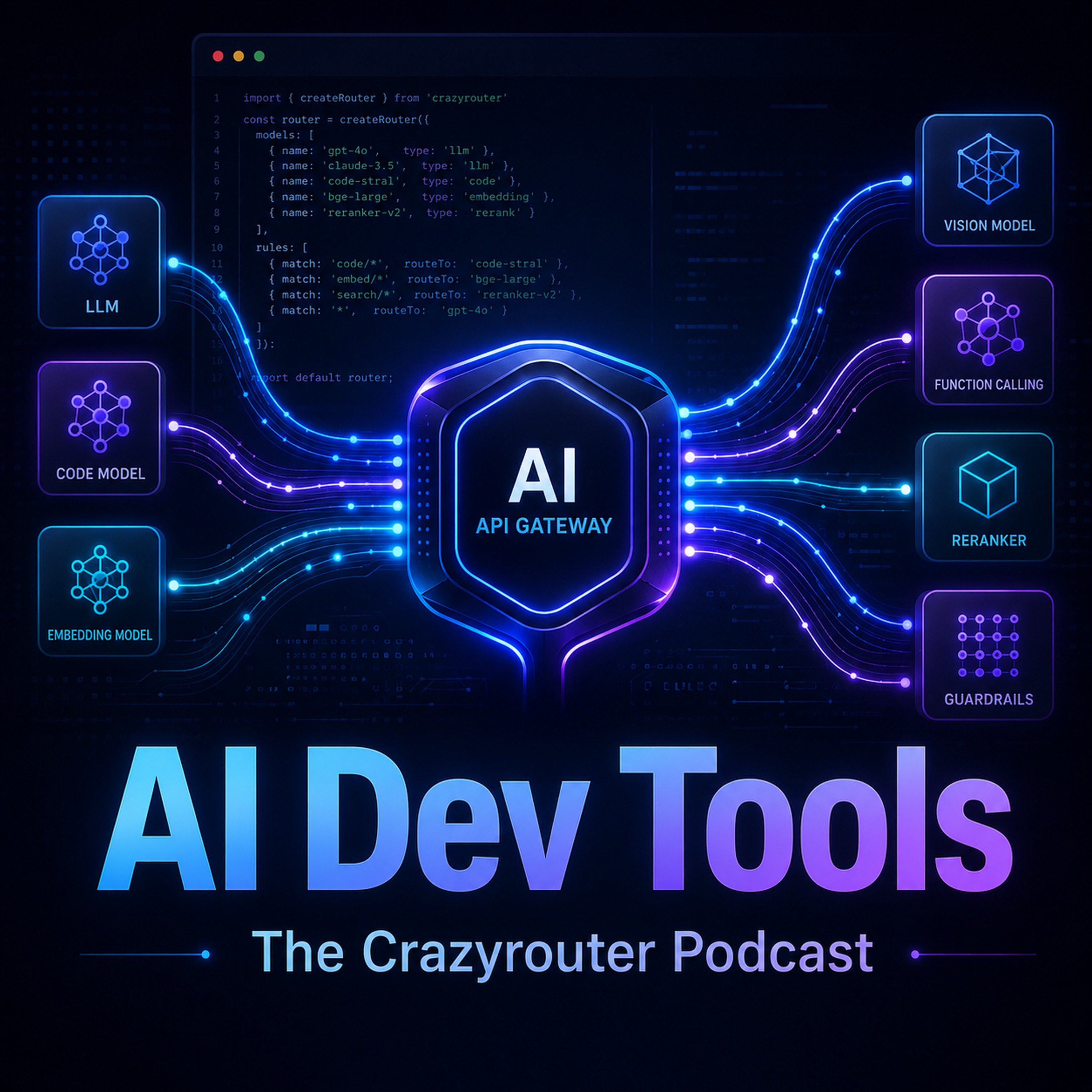
- Avoid model lock-in. MCP servers are model-agnostic, so your tool integrations work the same whatever model sits behind them. Pair them with an infrastructure layer that lets you swap models without rewriting agent logic; an OpenAI-compatible gateway such as Crazyrouter, for example, lets you change models in configuration instead of code.
- Watch the authentication story. Enterprise-grade auth is the biggest gap in both protocols. At the time of recording, MCP had added OAuth 2.1 support, a significant step, but production systems still need careful token management, scope control and audit logging.
Example: a modular customer support system#
Picture an AI customer support product. A front-end agent handles user conversations and picks a suitable model for each interaction. Through MCP it connects to the knowledge base, ticketing system and CRM. When an issue gets complex, it delegates via A2A to a specialist agent, such as a billing expert or a technical troubleshooter, each with its own MCP connections and model preferences.
The result is modular, swappable and provider-independent: a network of specialized agents linked by open protocols, each using the best model for its task, rather than one monolithic application.
Because each specialist owns its own tools and model choices, you can upgrade or replace one of them without rewriting the rest of the system.