 简体中文
简体中文 繁體中文
繁體中文 English
 Français
 Русский
 日本語
日本語 Tiếng Việt
 한국어
한국어 Deutsch
 Español
 Italiano
 Português
 العربية
 ไทย
ไทย Bahasa Indonesia
 Bahasa Melayu
 Türkçe
 Polski
 Nederlands
 Dansk
Dansk Norsk
Norsk Қазақша
Gemini Advanced Review 2026: Context Windows, RAG Workflows, and Real Developer Cost
A developer-focused Gemini Advanced review covering long-context analysis, RAG prototyping, subscription versus API economics, and production handoff.
Gemini Advanced Review 2026: Context Windows, RAG Workflows, and Real Developer Cost#
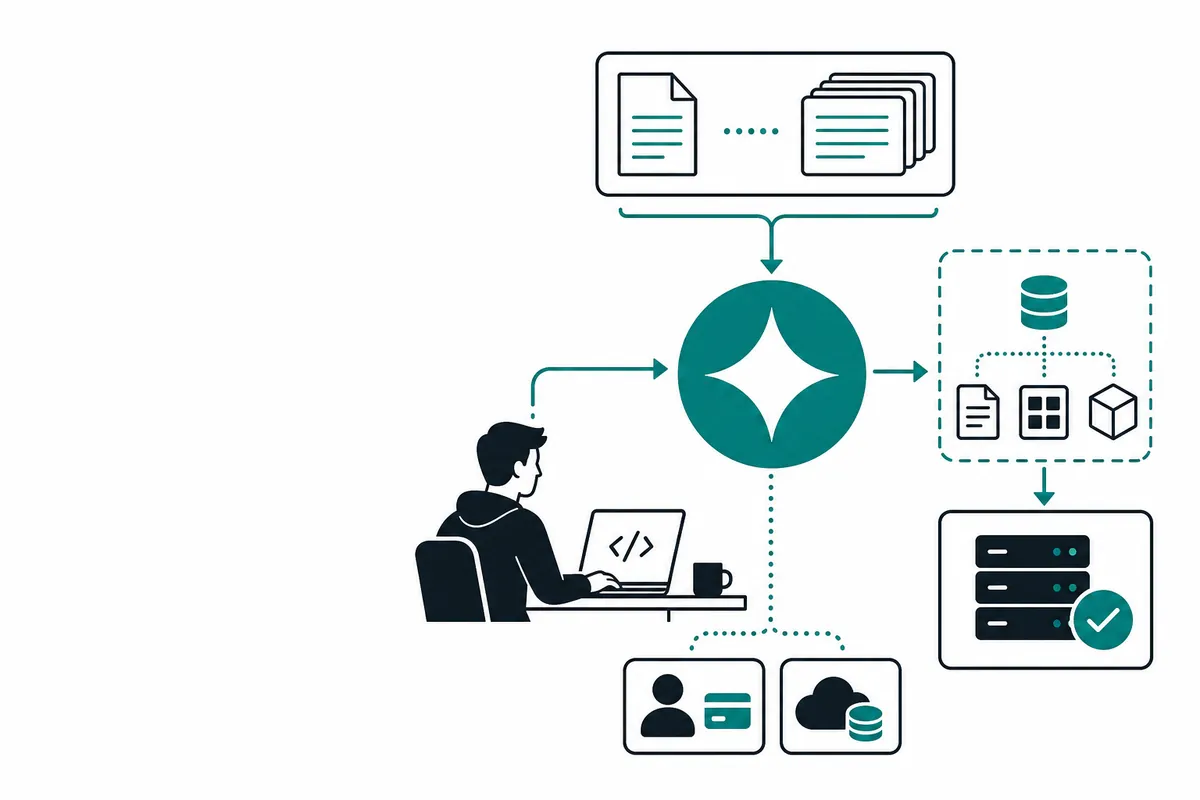
Is Gemini Advanced worth it in 2026? For developers, the answer depends less on chat quality in isolation and more on how often you work with long documents, notebooks, codebases, and retrieval-augmented generation prototypes. This review separates the consumer subscription from API usage and shows where each fits.
What is this topic?#
For developers, this topic sits at the intersection of model capability, API integration, and operating cost. The right implementation is not the one with the most impressive demo; it is the one that produces acceptable results repeatedly, exposes failures clearly, and stays within a known budget. Start by defining the task, the success metric, the maximum latency, and the data boundary.
Gemini Advanced Review 2026: Context Windows, RAG Workflows, and Real Developer Cost vs alternatives#
Gemini Advanced is convenient for interactive research, large-context exploration, and quick prototyping. A direct API is better for repeatable workloads, service accounts, logging, and per-request accounting. Claude and GPT alternatives may be preferable for specific coding or tool-use tasks, so a small evaluation set is more useful than a universal ranking.
A useful decision rule is simple: choose the smallest model or tool that passes your evaluation set. Keep a premium path for difficult cases, but do not send every request through the most expensive option. Log the model, prompt version, latency, token or media usage, retry count, and final reviewer outcome. This turns a subjective comparison into an engineering decision.
How to use it with an API#
The examples below use an OpenAI-compatible shape. Replace the model identifier with the exact name shown in the current Crazyrouter model catalog, keep the key on a server, and add timeouts plus structured error handling in production.
from openai import OpenAI
import os

client = OpenAI(api_key=os.environ["CRAZYROUTER_API_KEY"],
                base_url="https://crazyrouter.com/v1")

prompt = "Summarize the retrieved passages, cite passage IDs, and say when evidence is missing."
result = client.chat.completions.create(
    model="gemini-2.5-flash",
    messages=[{"role":"user","content":prompt}],
    temperature=0.2,
)
print(result.choices[0].message.content)
For production, add an idempotency key to asynchronous jobs, validate user input before submission, and persist the provider response. A failed request should be classified as a transient transport error, a rate limit, an invalid parameter, a policy rejection, or a permanent input failure. Only the first category should be retried automatically, and retries need exponential backoff with a hard cap.
Pricing breakdown#
Treat the subscription as a fixed monthly experiment budget and the API as variable infrastructure spend. Official subscription and API prices change, so verify the current numbers before purchase. With Crazyrouter, developers can compare supported models behind one OpenAI-compatible endpoint and route low-risk summarization to a cheaper tier while preserving a premium fallback.
| Cost dimension | Official provider route | Crazyrouter route |
|---|---|---|
| Authentication | Provider account and key | Crazyrouter account and key |
| Billing | Provider's current unit price | Current routed model price |
| Model choice | Provider-specific | Supported multi-model catalog |
| Fallbacks | Usually application-managed | Can be centralized with policy |
| Best for | First-party features | Comparison, routing, and one API surface |
Do not copy a historical price into a long-lived budget. Recheck the official pricing page and the Crazyrouter pricing page before launch. The number that matters is effective cost per successful task: total spend divided by accepted outputs, including retries and rejected generations.
Implementation checklist#
- Define a small representative evaluation set before changing providers.
- Keep credentials server-side and separate local, staging, production, and CI access.
- Set request, token, media-duration, concurrency, and monthly budget limits.
- Record model, version, latency, usage, retries, and outcome for every request.
- Add a cheaper first pass and a premium escalation path only when quality requires it.
- Review failures weekly and remove prompts or workflows that create avoidable retries.
FAQ#
Is Gemini Advanced worth it for developers?#
It is worth testing when long-context research and interactive productivity matter. Heavy production automation should be priced as API infrastructure.
Is a subscription the same as API access?#
No. A consumer subscription and an API account normally have different quotas, billing, controls, and integration paths.
Can Gemini Advanced replace a RAG system?#
It can validate prompts and context strategies, but production RAG still needs retrieval, access control, citations, and evaluation.
How should I compare Gemini with Claude?#
Use the same code, documents, tool calls, latency target, and budget against a representative evaluation set.
Where does Crazyrouter fit?#
It provides a unified API surface for comparing and routing supported models without rewriting every integration.
Summary#
The practical way to evaluate gemini advanced review, is gemini advanced worth it, Gemini Advanced for RAG is to combine capability, reliability, and effective cost. Build a small test set, keep the integration observable, and make budget and fallback decisions explicit. If you want to compare supported models behind one developer-friendly interface, visit Crazyrouter.