 中文
中文 English
 Français
 Русский
 日本語
日本語 Tiếng Việt
 한국어
한국어 Deutsch
 Español
 Italiano
 Português
 العربية
 ไทย
ไทย Bahasa Indonesia
 Bahasa Melayu
 Türkçe
 Polski
 Nederlands
 Dansk
Dansk Norsk
Norsk Қазақша
"AI API Pricing Comparison 2026: OpenAI, Claude, Gemini, DeepSeek, and Gateways"
"Compare AI API pricing in 2026 by token economics, context, caching, batch work, and production workflow. Includes code examples and a practical gateway cost model."

AI API Pricing Comparison 2026: OpenAI, Claude, Gemini, DeepSeek, and Gateways#
AI API pricing is not one number. A model may charge separately for input and output, offer cached-input discounts, change rates by context size, or provide a lower-cost batch mode. The cheapest model per token is not always the cheapest model per successful task.
This 2026 comparison gives developers a framework for choosing models without hard-coding stale prices into an application.
How AI API pricing works#
Most text APIs use a token formula:
cost = (input_tokens / 1,000,000 x input_rate)
     + (output_tokens / 1,000,000 x output_rate)
Add image, audio, tool, storage, or search charges where applicable. Output is often more expensive than input, so verbose prompts and unnecessarily long answers can dominate cost.
Provider comparison#
| Provider | Typical strength | Cost pattern | Good fit |
|---|---|---|---|
| OpenAI | Broad ecosystem and coding | Multiple capability tiers | General applications and agents |
| Anthropic | Coding and careful reasoning | Premium flagship plus faster tiers | Code review and complex analysis |
| Google Gemini | Long context and multimodal work | Several low-cost and premium tiers | Documents, images, and scale |
| DeepSeek | Efficient reasoning and value | Competitive metered pricing | High-volume text workloads |
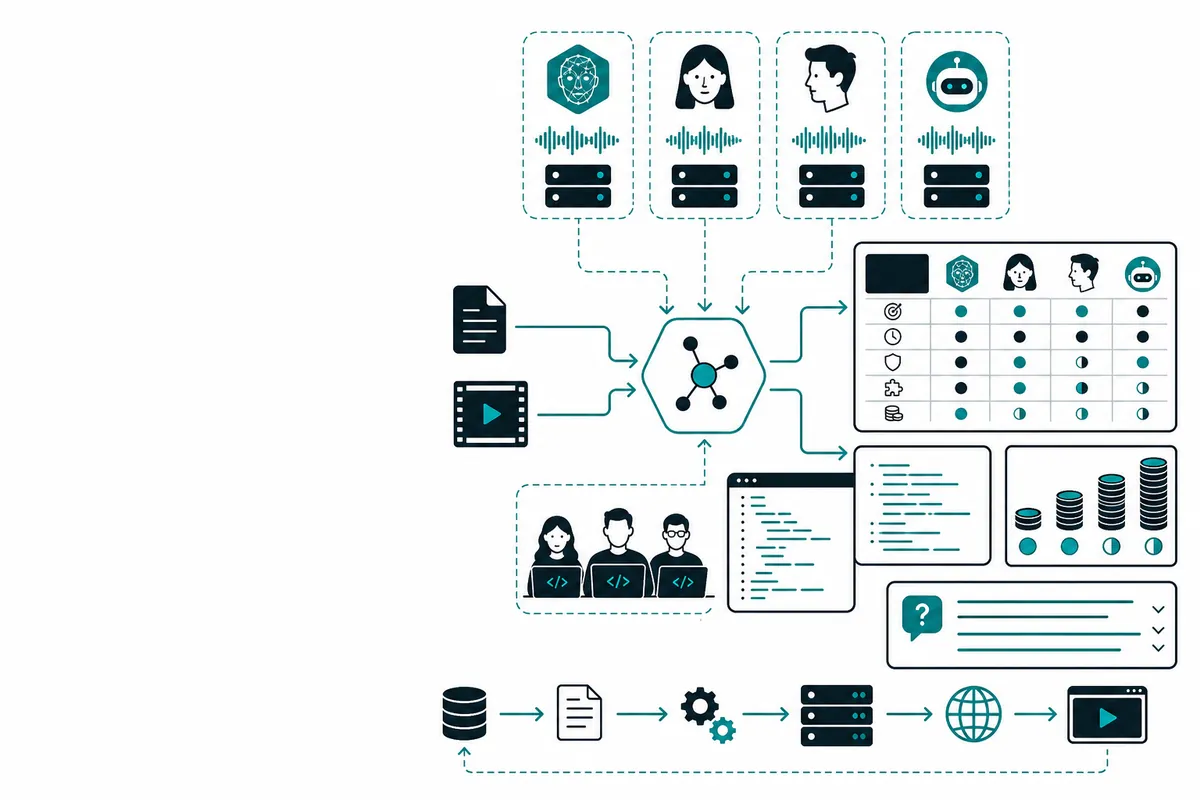
| Gateway | Provider choice and routing | Live model-specific rates | Multi-model products |
Published rates change. Treat the table above as a selection map, then verify current numbers on each provider’s pricing page.
Compare cost per task, not only cost per million tokens#
Suppose Model A costs less per token but fails structured output 15% of the time. Model B costs more but succeeds on the first attempt. Model B may be cheaper after retries, human review, and latency are included.
Track:
- Input and output tokens
- Successful completion rate
- Retry count
- Time to first token
- Total latency
- Human correction time
- Cost per accepted result
A simple log record can look like this:
{
  "model": "gemini-2.5-flash",
  "input_tokens": 1840,
  "output_tokens": 420,
  "success": true,
  "latency_ms": 920,
  "retry_count": 0
}
Call multiple models with one interface#
from openai import OpenAI

client = OpenAI(
    api_key="your-crazyrouter-key",
    base_url="https://crazyrouter.com/v1",
)

for model in ["gpt-5-mini", "claude-sonnet-4-6", "gemini-2.5-flash", "deepseek-v3.2"]:
    result = client.chat.completions.create(
        model=model,
        messages=[{"role": "user", "content": "Classify this support ticket as billing, bug, or feature."}],
        temperature=0,
    )
    print(model, result.choices[0].message.content)
Node.js:
import OpenAI from "openai";
const client = new OpenAI({
  apiKey: process.env.CRAZYROUTER_API_KEY,
  baseURL: "https://crazyrouter.com/v1",
});
const result = await client.chat.completions.create({
  model: "deepseek-v3.2",
  messages: [{ role: "user", content: "Extract the order ID as JSON." }],
});
console.log(result.choices[0].message.content);
Official versus Crazyrouter pricing#
| Dimension | Direct provider account | Crazyrouter |
|---|---|---|
| Billing | Each provider bills separately | One gateway balance, pay as you go |
| Model switching | Different SDKs and keys may be required | OpenAI-compatible base URL for supported models |
| Fallback | You implement it | Gateway routing and upstream options can simplify it |
| Exact price | Provider’s current published rate | Current model rate shown on gateway pricing page |
| Best for | Single-provider commitment | Evaluation, mixed workloads, and simpler operations |
Crazyrouter rates are live and model-specific. Check current pricing instead of copying numbers from an old article. There is no monthly platform fee or minimum spend in the standard pay-as-you-go workflow.
Cost reduction techniques#
Use a smaller model for routing and classification. Trim duplicated instructions. Cache stable context. Limit maximum output tokens. Use batch processing for offline work where supported. Finally, add a budget alert and reject requests that exceed a known task envelope.
FAQ#
Which AI API is cheapest in 2026?#
It depends on the task, token mix, context, and retry rate. Efficient models such as DeepSeek or smaller Gemini tiers are often competitive for high-volume text.
Is API access cheaper than a subscription?#
They solve different problems. API access is metered and programmable; a subscription is a product plan with usage rules.
Does a gateway add a fee?#
Gateway pricing depends on the service and model. Check the live pricing page and compare the total cost, including operational savings.
How can I compare providers fairly?#
Run the same fixed test set, validate outputs automatically, record latency, and calculate cost per successful result.
Should I use one model in production?#
Not necessarily. A primary model plus a tested fallback can improve availability, but routing must preserve privacy and output contracts.
Summary#
The useful AI API pricing comparison is a cost-per-successful-task comparison. Measure tokens, retries, latency, and output quality. With a compatible gateway such as Crazyrouter, you can run that evaluation across OpenAI, Claude, Gemini, DeepSeek, and other supported models through one integration, then verify current pricing before launch.