 中文
中文 English
 Français
 Русский
 日本語
日本語 Tiếng Việt
 한국어
한국어 Deutsch
 Español
 Italiano
 Português
 العربية
 ไทย
ไทย Bahasa Indonesia
 Bahasa Melayu
 Türkçe
 Polski
 Nederlands
 Dansk
Dansk Norsk
Norsk Қазақша
"Seedance Video AI Guide 2026: ByteDance Models, API Workflow, and Alternatives"
"A developer guide to Seedance and ByteDance video AI covering use cases, prompting, asynchronous API integration, alternatives, pricing models, and production checks."

Seedance Video AI Guide 2026: ByteDance Models, API Workflow, and Alternatives#
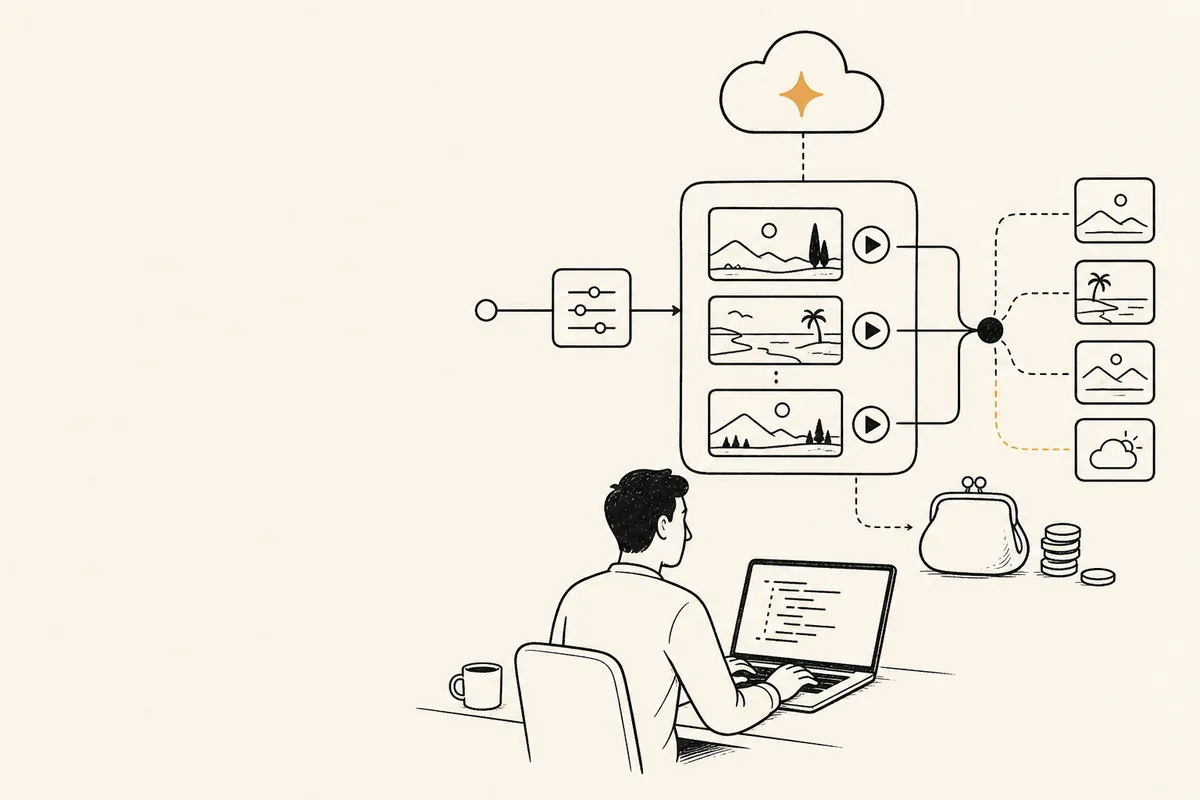
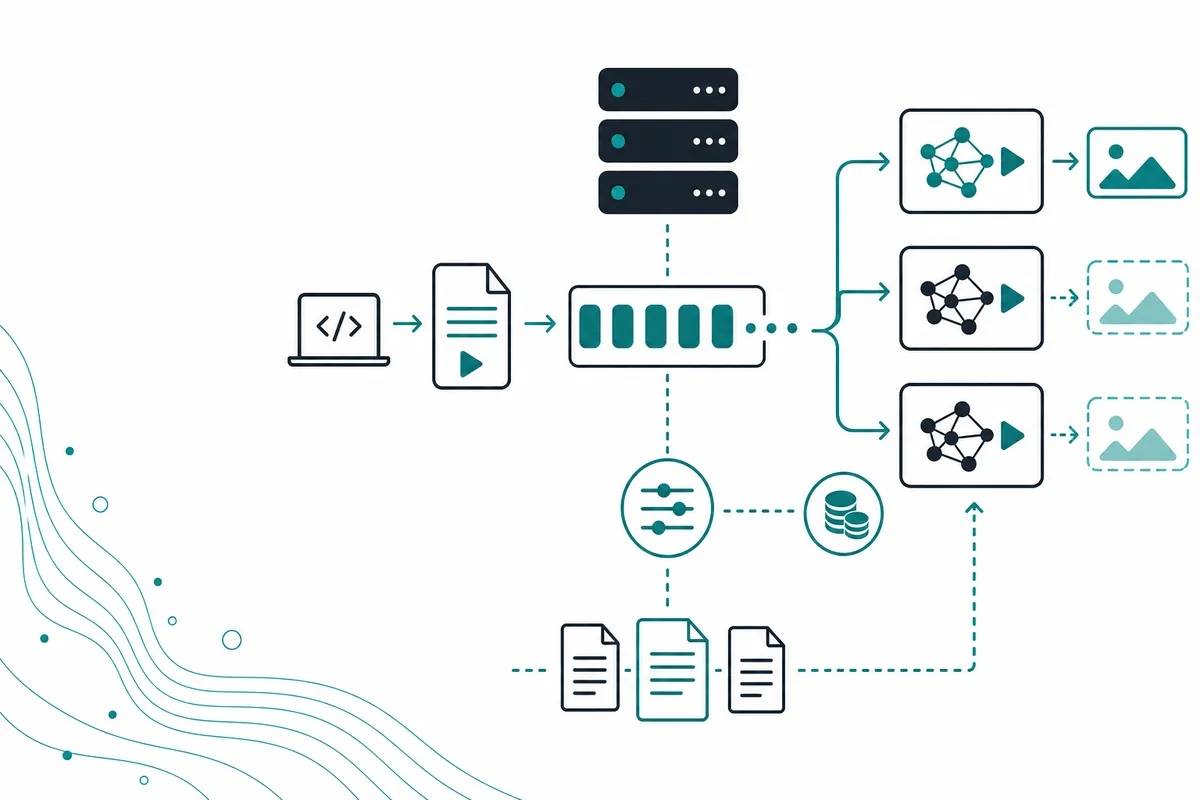
Seedance is part of ByteDance’s generative-video model family. It is relevant to developers because short-form video generation is moving from a manual creative tool into an API workflow: submit a shot description, wait for an asynchronous job, validate the output, and assemble accepted clips into a product or campaign.
This guide explains where Seedance fits, how to compare it with alternatives, and how to design an integration that survives model and endpoint changes.
What is Seedance?#
Seedance is a video-generation model line associated with ByteDance. Current capabilities, versions, duration limits, and access paths can change. Typical use cases include text-to-video, image-to-video, social clips, product motion, storyboards, and visual prototypes.
A model name alone does not guarantee a good workflow. You also need queue reliability, predictable duration, output storage, moderation, and a prompt format your team can repeat.
Seedance vs alternatives#
| Model family | Common strength | Good fit | Watch for |
|---|---|---|---|
| Seedance | Short-form motion and rapid generation | Social clips and concept iteration | Version and access differences |
| Veo | Cinematic prompt following | High-quality concept shots | Cost and availability |
| Kling | Character and image-to-video workflows | Motion-heavy scenes | Endpoint-specific controls |
| Runway | Production-oriented creative tooling | Teams and editing workflows | Platform conventions |
| Wan | Open ecosystem and experimentation | Custom pipelines | Hosting or provider variation |
Run a test matrix with the same prompts, seeds where supported, durations, and aspect ratios. Evaluate temporal stability and usable seconds rather than selecting the prettiest single frame.
API workflow#
A unified gateway request can reduce provider-specific plumbing:
curl https://crazyrouter.com/v1/video/create \
  -H "Authorization: Bearer $CRAZYROUTER_API_KEY" \
  -H "Content-Type: application/json" \
  -d '{
    "model": "seedance",
    "prompt": "A product photographer rotates a silver watch under soft studio light, locked camera, realistic reflections",
    "duration": 6,
    "aspect_ratio": "9:16"
  }'
Treat the model alias and payload as examples. Confirm current documentation and supported fields.
Node.js queue worker:
const response = await fetch("https://crazyrouter.com/v1/video/create", {
  method: "POST",
  headers: {
    Authorization: `Bearer ${process.env.CRAZYROUTER_API_KEY}`,
    "Content-Type": "application/json",
  },
  body: JSON.stringify({
    model: "seedance",
    prompt: "A wide shot of a cyclist crossing a modern bridge at sunrise",
    duration: 6,
  }),
});
if (!response.ok) throw new Error(`create failed: ${response.status}`);
const job = await response.json();
console.log(job.id);
Persist the task ID and poll from a background worker, not from a browser tab.
Prompt structure#
Use a consistent order: subject, action, scene, camera, visual style, timing, and constraints. Avoid asking for several camera moves in a six-second shot. For image-to-video, describe motion and camera behavior rather than repeating everything visible in the source image.
Pricing comparison#
| Access route | Price unit | What to compare |
|---|---|---|
| Official or cloud access | Current provider credits or seconds | Quota and regional availability |
| Specialist video platform | Credits per generation | Editing tools and success rate |
| Crazyrouter | Live supported-model price | One balance and cross-model workflow |
Normalize costs to accepted output seconds. A cheap render that fails identity preservation is not cheap after three retries. Check the official provider information and Crazyrouter pricing for current rates.
Production checklist#
Validate duration, codec, frame dimensions, audio tracks, file size, and download integrity. Store prompt, model version, request ID, and moderation result. Use signed URLs and expire source assets containing customer data.
FAQ#
Who makes Seedance?#
Seedance is associated with ByteDance’s generative-video model ecosystem.
Does Seedance have an API?#
Access depends on the current provider, platform, and region. Some gateways may expose supported versions through a unified video endpoint.
Is Seedance better than Veo or Kling?#
It depends on the shot. Compare motion, prompt following, consistency, latency, and cost with your own test set.
Can Seedance animate an image?#
Some versions or access paths may support image-to-video. Check the current model schema.
How should I price a Seedance feature?#
Measure accepted seconds per user job, retries, storage, moderation, and support overhead, then add a budget cap.
Summary#
Seedance is worth testing for short-form generative video, but the production advantage comes from the surrounding pipeline. Use asynchronous jobs, repeatable prompts, quality checks, and cost-per-accepted-shot metrics. Crazyrouter can provide one API path for supported video models so you can compare Seedance with alternatives without rebuilding every integration.