 中文
中文 English
 Français
 Русский
 日本語
日本語 Tiếng Việt
 한국어
한국어 Deutsch
 Español
 Italiano
 Português
 العربية
 ไทย
ไทย Bahasa Indonesia
 Bahasa Melayu
 Türkçe
 Polski
 Nederlands
 Dansk
Dansk Norsk
Norsk Қазақша
"Google Veo3 API Guide 2026: Text-to-Video Requests, Async Jobs, and Cost Control"
"Learn how to integrate Google Veo3-style video generation with cURL and Python, design asynchronous polling, validate outputs, and compare direct versus gateway access."

Google Veo3 API Guide 2026: Text-to-Video Requests, Async Jobs, and Cost Control#
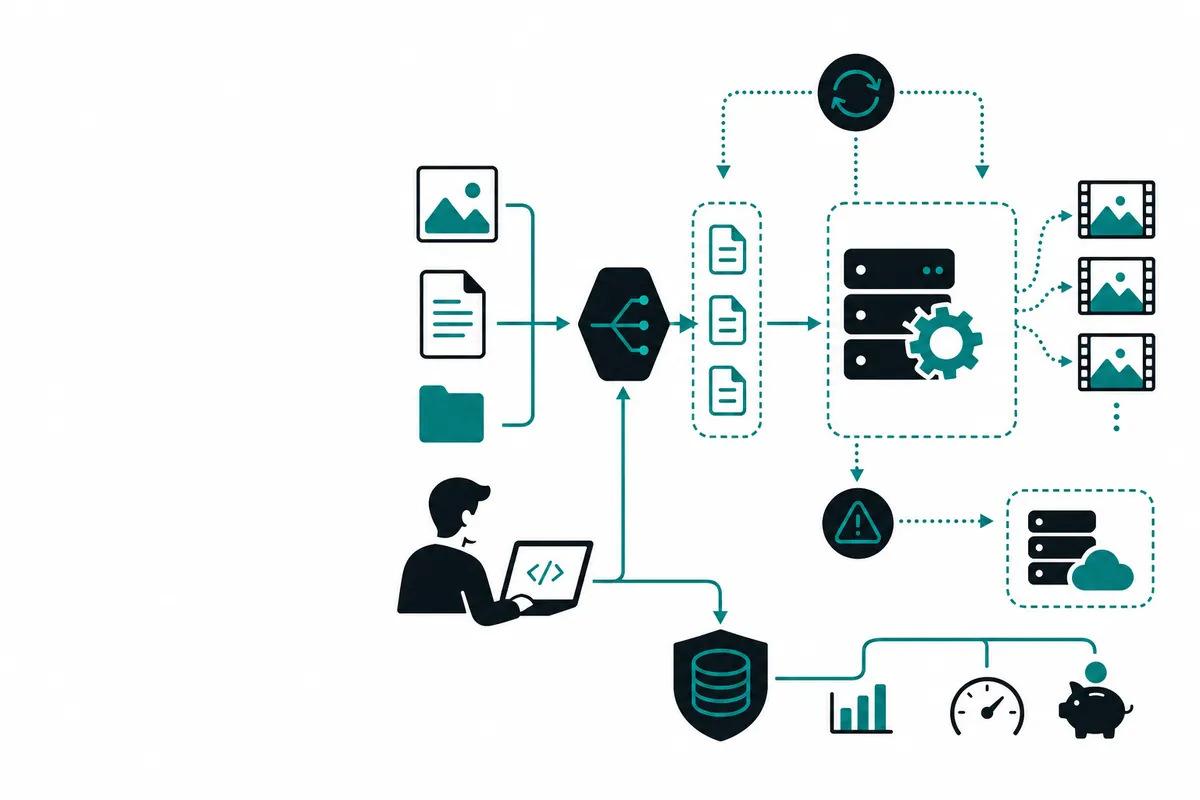
Google Veo3 is designed for high-quality generative video, but integrating a video model is different from calling a chat completion. A generation may take minutes, return a job rather than a file, and require validation before your application can safely show the result.
This guide explains the API workflow, prompt structure, asynchronous design, and pricing decisions without assuming that a particular endpoint or model alias will remain unchanged.
What is the Veo3 API?#
The Veo3 API exposes video generation through a programmable interface. Depending on the current Google product and access tier, requests may support text-to-video, image-to-video, audio-aware generation, duration controls, aspect ratio, and safety settings.
Always verify the current official schema. Video APIs evolve quickly, and an example written for one preview release may not work with the next.
Veo3 vs other video APIs#
| Option | Strength | Best for | Trade-off |
|---|---|---|---|
| Veo3 | High-quality generative video and rich prompts | Cinematic clips and concepting | Access and cost can vary |
| Kling | Motion and character workflows | Social and image-to-video tasks | Different prompt behavior |
| Runway | Creative production tooling | Commercial video workflows | Product-specific API model |
| Seedance | Fast experimentation | Short-form generation | Availability varies |
| Crazyrouter | Unified access to supported video models | Model comparison and fallback | Check live endpoint support |
Choose based on shot length, consistency, audio needs, and throughput rather than model reputation alone.
Basic request pattern#
A gateway-compatible request may look like this:
curl https://crazyrouter.com/v1/video/create \
  -H "Authorization: Bearer $CRAZYROUTER_API_KEY" \
  -H "Content-Type: application/json" \
  -d '{
    "model": "veo3",
    "prompt": "A locked-off close-up of a ceramic cup on a wooden desk, morning light, subtle steam, natural motion",
    "duration": 8,
    "aspect_ratio": "16:9"
  }'
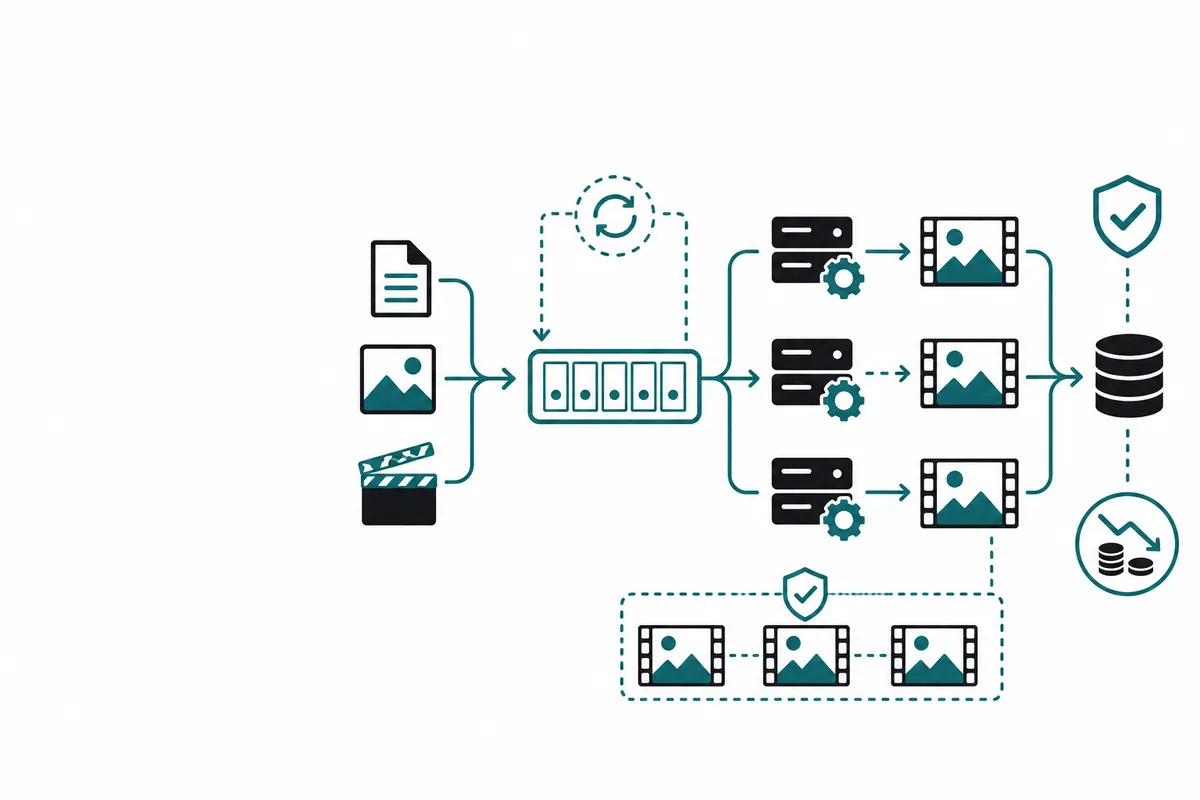
The response may contain a task ID rather than a finished video. Persist that ID in your database.
import os
import time
import requests

base = "https://crazyrouter.com"
headers = {"Authorization": f"Bearer {os.environ['CRAZYROUTER_API_KEY']}"}
create = requests.post(
    f"{base}/v1/video/create",
    headers=headers,
    json={"model": "veo3", "prompt": "A slow dolly through a quiet library", "duration": 8},
    timeout=30,
)
create.raise_for_status()
task_id = create.json()["id"]

while True:
    result = requests.get(f"{base}/v1/video/query", params={"id": task_id}, headers=headers, timeout=30)
    result.raise_for_status()
    data = result.json()
    if data.get("status") in {"completed", "failed"}:
        print(data)
        break
    time.sleep(5)
Prompting for reliable shots#
Describe subject, action, camera, lighting, environment, timing, and constraints. Keep one shot focused. Mention what must remain static, such as a logo or product shape. Generate several candidates when a shot will be edited into a larger sequence.
Pricing comparison#
| Route | Billing basis | Operational consideration |
|---|---|---|
| Google direct | Current Google video pricing and quota | Provider-specific account and schema |
| Other video vendor | Per generation, second, or credits | Different quality and retry behavior |
| Crazyrouter | Live rate for supported model | One balance and compatible API workflow |
Video costs should be measured as cost per accepted shot, including failed generations and review time. Check current Crazyrouter pricing and the official Google pricing page before committing.
Production safeguards#
Use queue workers, bounded polling, webhook support when available, download checks, content moderation, and retention policies. Do not expose provider keys in a mobile app. Add idempotency to avoid duplicate expensive jobs after a network timeout.
FAQ#
Is Veo3 available through an API?#
Availability depends on the current Google product, account, region, and release. Check official access requirements.
How long does Veo3 take to generate a video?#
It varies with load, duration, resolution, and queue behavior. Design for asynchronous processing.
Can I use Veo3 with Python?#
Yes, through the official SDK or an HTTP-compatible endpoint, depending on your access path.
Is Veo3 cheaper through a gateway?#
A gateway may offer different live pricing and operational convenience. Compare current rates and cost per accepted shot.
How do I store generated videos?#
Download from the provider result into controlled storage with expiration, access control, and metadata.
Summary#
The Veo3 API is best integrated as a job system: submit, persist the task ID, poll or receive a webhook, validate the file, and only then publish it. A compatible gateway such as Crazyrouter can make model experiments and fallback workflows simpler, but always confirm live model support and pricing first.