 简体中文
简体中文 繁體中文
繁體中文 English
 Français
 Русский
 日本語
日本語 Tiếng Việt
 한국어
한국어 Deutsch
 Español
 Italiano
 Português
 العربية
 ไทย
ไทย Bahasa Indonesia
 Bahasa Melayu
 Türkçe
 Polski
 Nederlands
 Dansk
Dansk Norsk
Norsk Қазақша
Kimi K2 Thinking Guide July 2026: Build a Long-Context Evaluation Harness
A Kimi K2 Thinking guide for developers evaluating long-context reasoning, tool use, latency, and cost before production deployment.

Kimi K2 Thinking Guide July 2026: Build a Long-Context Evaluation Harness#
Kimi K2 Thinking is interesting to developers because reasoning quality is only one part of the deployment decision. Long-context models can be powerful while still failing on retrieval, tool arguments, latency, or budget predictability. This guide builds a small evaluation harness instead of relying on leaderboard headlines.
What Is Kimi K2 Thinking Guide July 2026?#
Kimi K2 Thinking is a reasoning-oriented language model used for complex analysis, coding, planning, and agent workflows. The useful question is not whether it “thinks” in the abstract, but whether it produces correct, verifiable outputs for your workload within your latency and cost envelope.
Kimi K2 Thinking Guide July 2026 vs Alternatives#
Compare it with a premium reasoning model, a fast general model, and an open model. Give every model the same prompt, tools, context, and stopping rules. Score final answer correctness separately from reasoning length. A gateway makes side-by-side testing easier because application code can keep one compatible interface while model IDs change in configuration.
| Decision factor | Direct provider | Managed gateway | Self-hosted stack |
|---|---|---|---|
| Integration | Provider-specific | Compatible shared endpoint | Your adapter |
| Model switching | Manual | Configuration or routing | Custom |
| Operations | Lower platform work | Centralized controls | Highest ownership |
| Best for | Single-provider apps | Teams and multi-model apps | Compliance and deep customization |
How to Use It with Code#
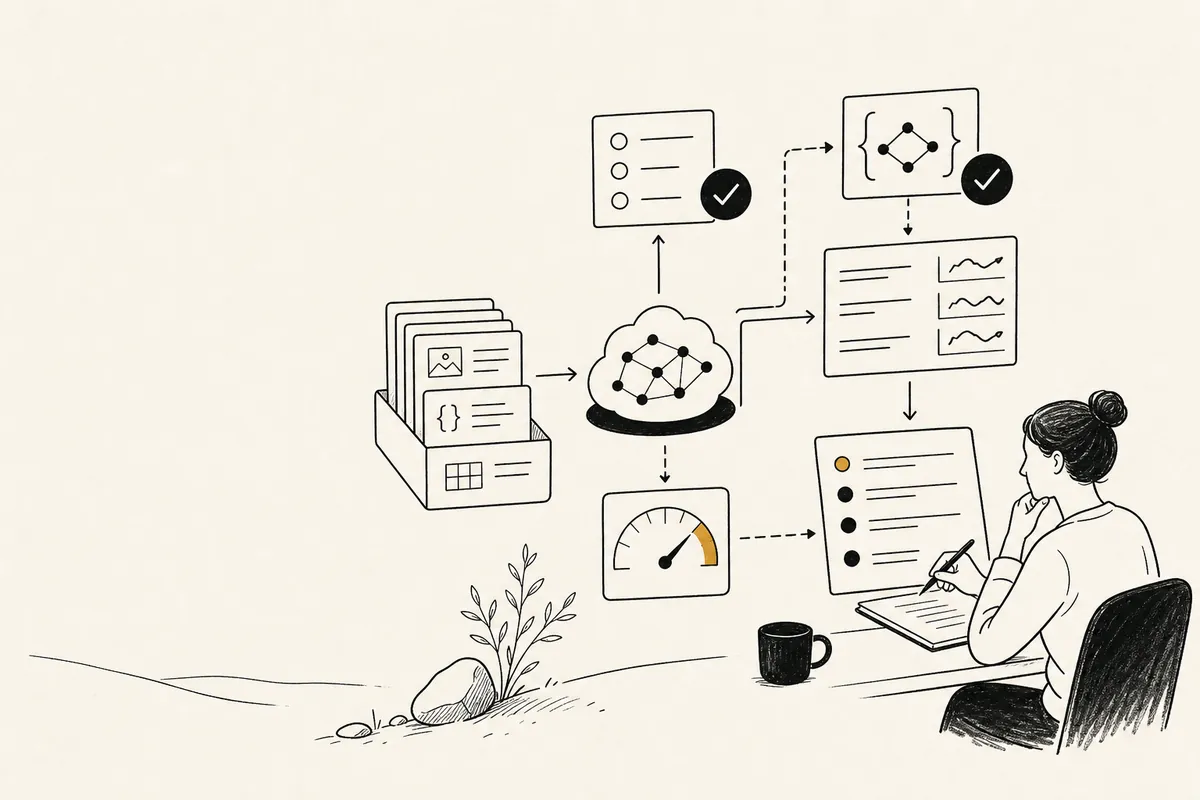
Create JSONL test cases with input, expected facts, allowed tools, and grading rules. Run each case across models, capture latency and token usage, then add a judge only for triage—not as the sole truth. Include adversarial cases: irrelevant long context, malformed tool output, contradictory documents, and a task that should refuse to guess.
import json, os
from openai import OpenAI

client = OpenAI(api_key=os.environ["CRAZYROUTER_API_KEY"], base_url="https://crazyrouter.com/v1")
case = {"question":"Find the breaking change in this release note and cite the section."}
reply = client.chat.completions.create(
    model="kimi-k2-thinking",
    messages=[{"role":"user", "content": json.dumps(case)}],
    max_tokens=1200,
)
print(reply.choices[0].message.content)
Pricing Breakdown#
| Model route | Best use | Budget lever |
|---|---|---|
| Kimi K2 Thinking direct | First-party Kimi workloads | Current token rates and quotas |
| Crazyrouter Kimi route | Multi-model evaluation | Central limits and model switching |
| Fast fallback model | Simple or time-sensitive tasks | Lower output cap and shorter context |
| Local open model | Private low-risk tasks | Hardware utilization |
Rates, quotas, supported model IDs, and media billing can change. Treat the table as an architecture comparison and verify the live official provider page or the current Crazyrouter model catalog before committing to a budget. The practical advantage of a gateway is usually not a magic universal discount; it is the ability to centralize credentials, apply quotas, compare models, and route routine work to a better-cost option.
FAQ#
What is Kimi K2 Thinking good for?#
Use it for reasoning-heavy coding, planning, analysis, and agent tasks after validating it on your own data.
How should I compare reasoning models?#
Use fixed tasks and score correctness, tool success, latency, token use, and refusal behavior.
Does longer reasoning always mean better answers?#
No. Longer outputs can increase cost and latency without improving the final result.
Can Kimi K2 Thinking call tools?#
If the selected endpoint supports tool calling, validate schemas and arguments in your harness.
Why use a gateway for evaluation?#
A compatible gateway lets you switch models and centralize usage tracking without rewriting the application.
Summary#
Choose the access path that matches your workload: a first-party product for interactive use, a direct API for a focused integration, or a managed gateway when your application needs several models, centralized limits, and safer fallback behavior. Start with a small benchmark, instrument every request, and promote only the routes that meet your quality and margin targets.
If you want to test multiple models behind one OpenAI-compatible endpoint, try Crazyrouter and verify the current model list and pricing before production rollout.