 简体中文
简体中文 繁體中文
繁體中文 English
 Français
 Русский
 日本語
日本語 Tiếng Việt
 한국어
한국어 Deutsch
 Español
 Italiano
 Português
 العربية
 ไทย
ไทย Bahasa Indonesia
 Bahasa Melayu
 Türkçe
 Polski
 Nederlands
 Dansk
Dansk Norsk
Norsk Қазақша
Open Source vs Commercial AI Models in 2026: A Developer Decision Guide
Compare open source and commercial AI models across cost, privacy, latency, quality, deployment, licensing, and API operations for real software teams.

Open Source vs Commercial AI Models in 2026: A Developer Decision Guide#
The open source versus commercial AI decision is no longer a simple choice between “free” and “paid.” Open-weight models may reduce per-token fees, but they introduce GPU capacity, serving, patching, observability, and licensing work. Commercial APIs can be faster to launch and easier to scale, but they create provider dependency and usage-based costs. The right answer depends on workload shape and operational maturity.
What Is This Topic?#
The open source versus commercial AI decision is no longer a simple choice between “free” and “paid.” Open-weight models may reduce per-token fees, but they introduce GPU capacity, serving, patching, observability, and licensing work. Commercial APIs can be faster to launch and easier to scale, but they create provider dependency and usage-based costs. The right answer depends on workload shape and operational maturity. In practical engineering terms, the important unit is not the model name but the capability contract: accepted inputs, maximum context, output format, latency, rate limits, and data handling. Before integrating, check the provider’s current model catalog and run a small evaluation set using the exact prompts your product will send.
Open Source vs Commercial AI Models in 2026 vs Alternatives#
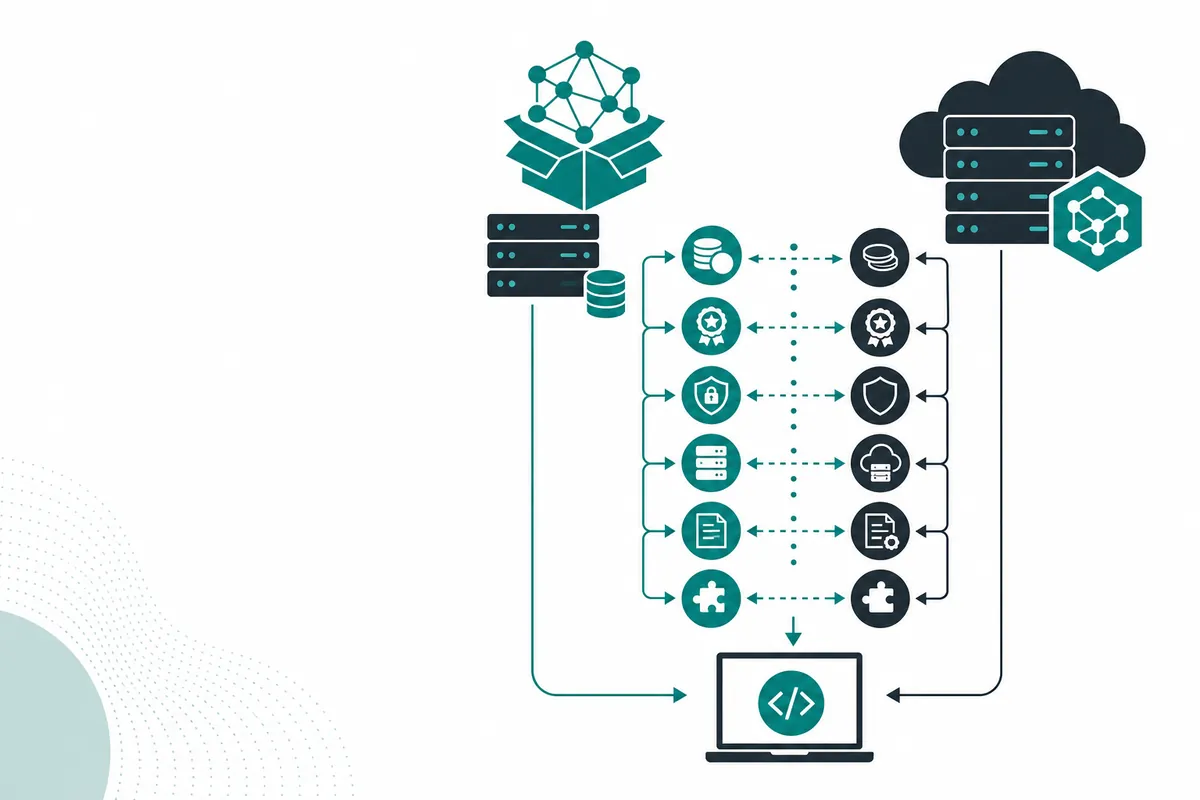
Commercial models usually win for frontier reasoning, rapid experimentation, and teams that do not want to operate inference. Open-weight models can win for stable high-volume classification, sensitive data that must stay in a controlled environment, or workloads where a smaller model is enough. A hybrid design is often best: commercial models for difficult cases, an open model for routine traffic, and a router for policy-based selection.
A useful comparison matrix is:
| Decision factor | Direct provider | Multi-model gateway | Self-hosted/open model |
|---|---|---|---|
| Setup speed | Fast for one provider | Fast for many models | Slowest |
| Model choice | Limited to provider | Broad | Depends on deployment |
| Billing | Separate accounts | Consolidated usage | Infrastructure cost |
| Portability | Lower | Higher | Depends on API layer |
| Operations | Provider-managed | Shared boundary | Team-managed |
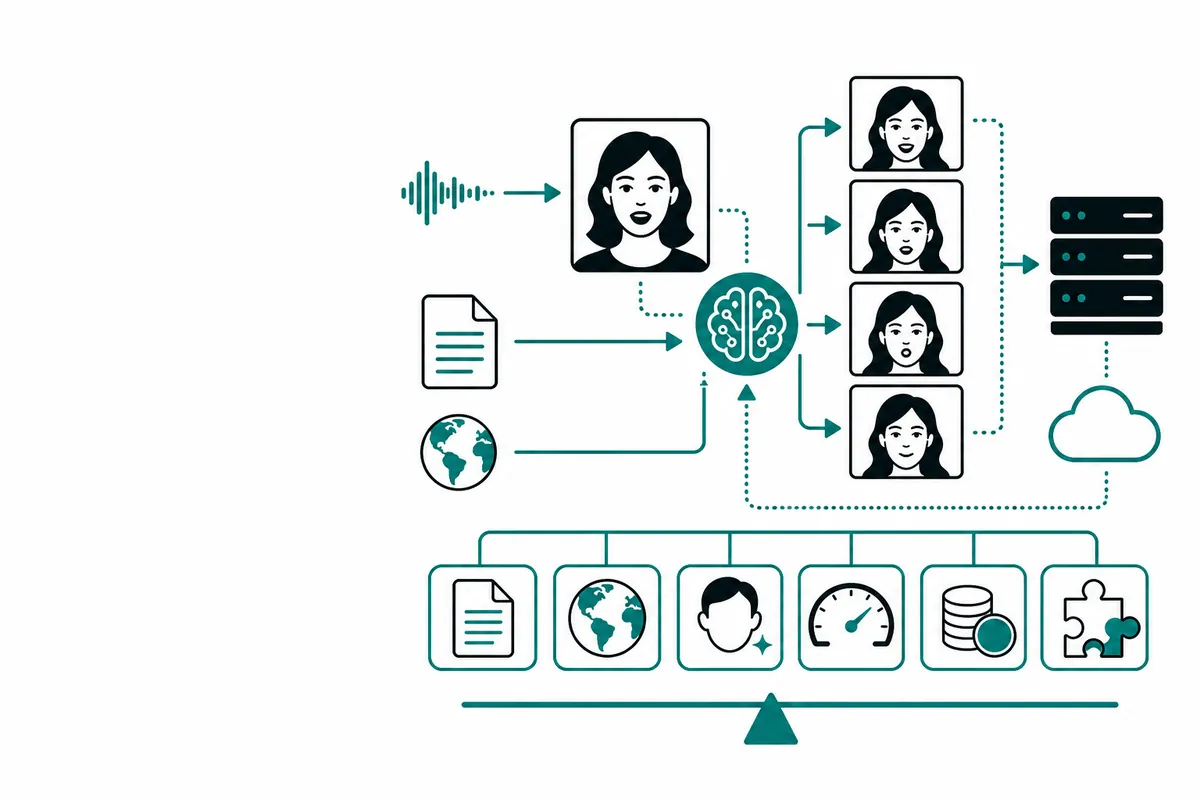
Do not compare only headline benchmark scores. Measure successful task rate, p95 latency, output validity, refusal behavior, and cost per successful task. A model that is 20% cheaper but requires frequent repair calls may be more expensive in production.
How to Use It with an API#
Define a scorecard before choosing. Include task success rate, cost per successful task, p95 latency, data residency, incident response, maximum context, tool calling, and exit cost. Then run the same evaluation set through both routes. An OpenAI-compatible gateway lets you keep the application code stable while changing the backend:
Python#
from openai import OpenAI

client = OpenAI(api_key="CRAZYROUTER_API_KEY", base_url="https://crazyrouter.com/v1")
model = "commercial-frontier-model"  # swap for an evaluated open model
result = client.chat.completions.create(
    model=model,
    messages=[{"role": "user", "content": "Extract the invoice total and currency."}],
    temperature=0,
)
print(result.choices[0].message.content)
Node.js#
import OpenAI from "openai";
const client = new OpenAI({ apiKey: process.env.CRAZYROUTER_API_KEY, baseURL: "https://crazyrouter.com/v1" });
const model = process.env.AI_MODEL || "commercial-frontier-model";
const out = await client.chat.completions.create({ model, messages: [{ role: "user", content: "Classify this support issue." }] });
console.log(out.choices[0].message.content);
cURL#
curl https://crazyrouter.com/v1/chat/completions \
  -H "Authorization: Bearer $CRAZYROUTER_API_KEY" \
  -H "Content-Type: application/json" \
  -d '{"model":"open-source-vs-commercial-ai-models-2026-developer","messages":[{"role":"user","content":"Give a concise developer example."}]}'
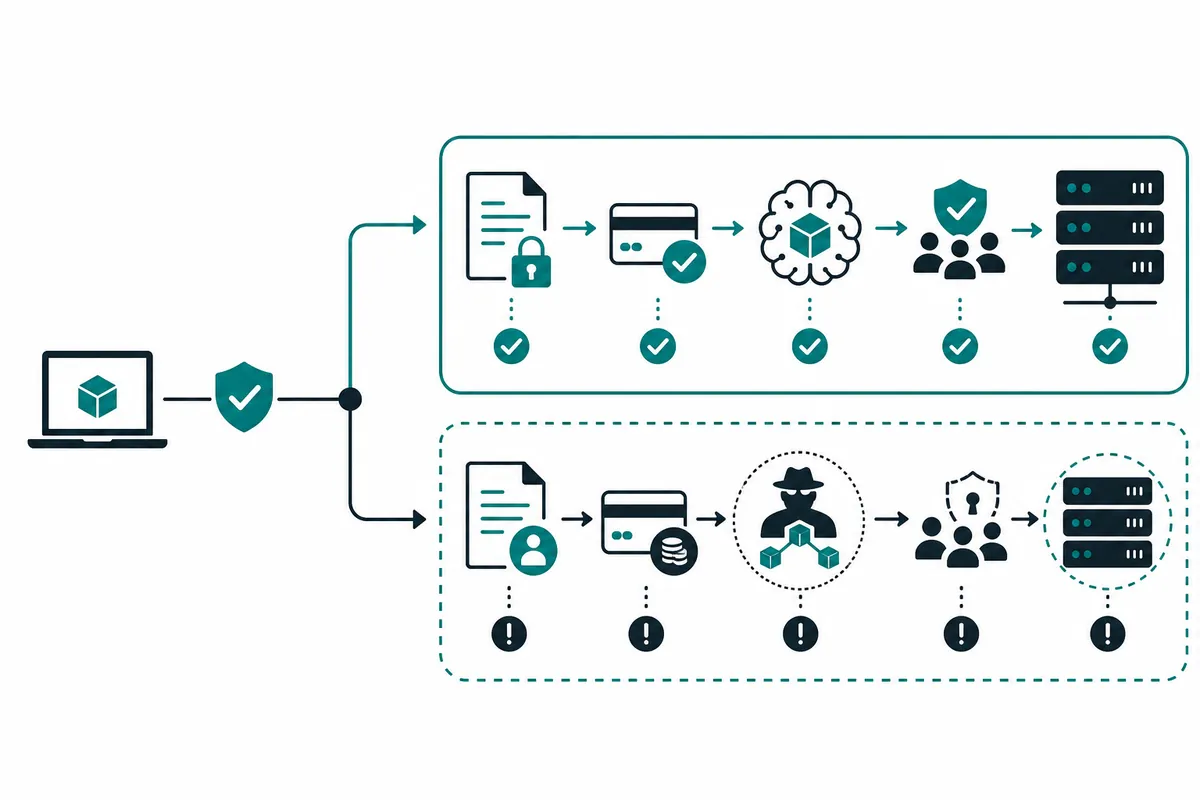
For production, add timeouts, request IDs, structured logs, schema validation, and a clear policy for transient errors. Never put an API key in browser code. Keep provider-specific model IDs in configuration, not scattered through business logic. If media inputs are involved, validate MIME type, size, duration, and user authorization before forwarding them.
Pricing Breakdown#
Compare total cost, not just token price. A hosted commercial API may have a predictable variable bill. Self-hosting adds GPU rental or purchase, idle capacity, engineering time, monitoring, upgrades, and disaster recovery. A managed gateway such as Crazyrouter can provide a low-friction middle path: one key, multiple providers, and the ability to route cost-sensitive tasks to cheaper models. Build a spreadsheet with traffic, average input/output tokens, cache hit rate, retry rate, and availability requirements.
| Cost component | What to measure | Practical control |
|---|---|---|
| Input tokens | Prompt and context size | Trim, summarize, cache |
| Output tokens | Completion length | Set limits and concise formats |
| Media | Images, audio, or video volume | Resize, sample, batch |
| Retries | Transient and repair calls | Backoff and retry budgets |
| Operations | Logs, queues, storage, GPUs | Retention and autoscaling policy |
For current rates, compare the official provider price with the live Crazyrouter pricing page. A gateway is most valuable when it reduces integration and switching costs, not when a static comparison table hides changing vendor rates. Start with a small test budget and record actual usage before committing to a monthly forecast.
Production Checklist#
- Pin a tested model ID or configuration alias.
- Validate outputs before storing or executing them.
- Add rate limits per user, team, and route.
- Redact secrets and personal data from logs.
- Track cost per successful task, not just request count.
- Keep a tested fallback for provider or model failures.
- Evaluate updates before changing the default route.
- Add human approval for destructive or external actions.
Frequently Asked Questions#
Are open source AI models free?#
Model weights may be available without a per-call fee, but inference infrastructure and compliance operations still cost money.
Are commercial APIs more accurate?#
Frontier commercial APIs often lead on difficult tasks, but a smaller open model can be better for a narrow, well-evaluated workflow.
Which option is more private?#
Self-hosting can provide stronger control, but privacy also depends on logging, access control, backups, and vendor contracts.
What is the best strategy for a startup?#
Start with managed APIs, instrument unit economics, and add open models only when volume, privacy, or latency justifies the operational investment.
Summary#
The fastest path from an AI model experiment to a dependable feature is a narrow contract, representative evaluation data, bounded cost, and observable failure handling. Start with one use case, compare at least two alternatives, and keep the provider boundary replaceable. If you want one API surface for evaluating multiple models, compare live rates and start building with Crazyrouter.