 简体中文
简体中文 繁體中文
繁體中文 English
 Français
 Русский
 日本語
日本語 Tiếng Việt
 한국어
한국어 Deutsch
 Español
 Italiano
 Português
 العربية
 ไทย
ไทย Bahasa Indonesia
 Bahasa Melayu
 Türkçe
 Polski
 Nederlands
 Dansk
Dansk Norsk
Norsk Қазақша
GPT-7 Outlook: What Do OpenAI’s 722 Mathematics Manuscripts Actually Tell Us?
Explore the GPT-7 speculation around 722 mathematics manuscripts: what the video claims, what Lean can verify, and what remains unknown about OpenAI’s unnamed model.
GPT-7 Outlook: What Do OpenAI’s 722 Mathematics Manuscripts Actually Tell Us?#
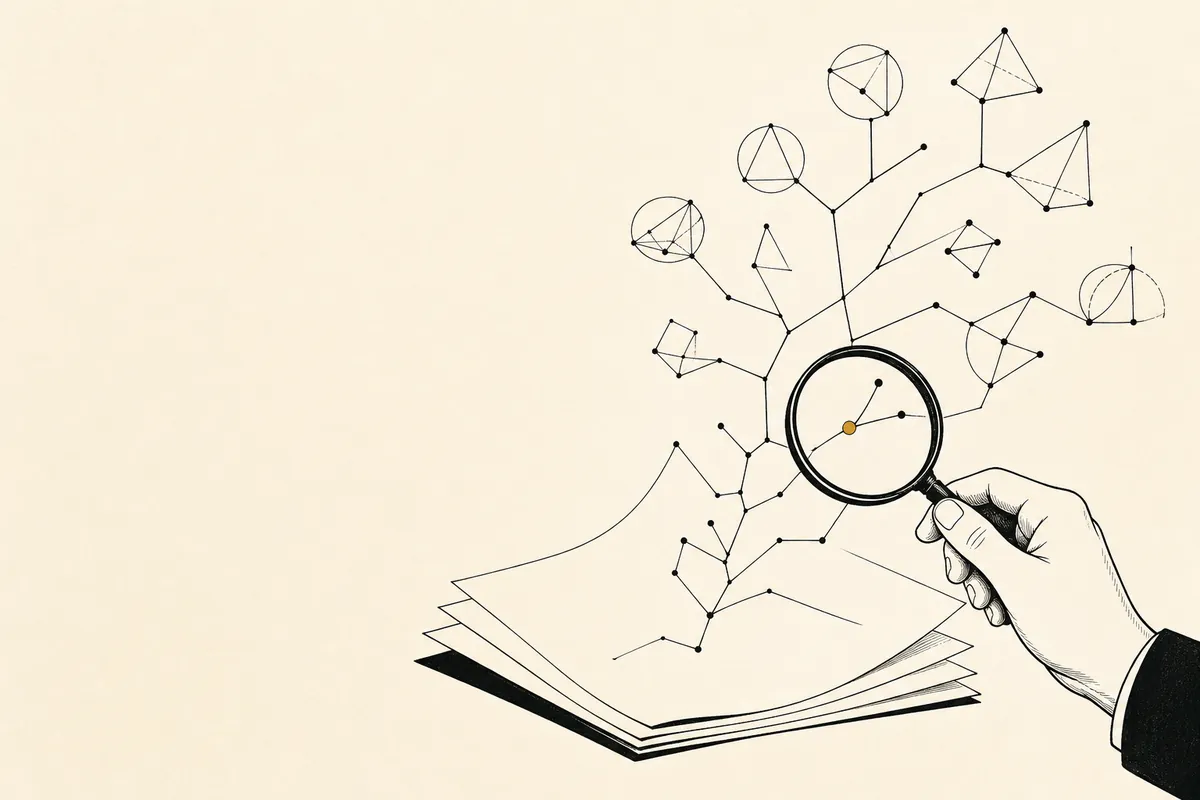
Why is the conversation about GPT-7 turning toward mathematics? In the source video, the presenter describes an unnamed internal OpenAI model exploring nearly 4,000 mathematical research problems. According to that account, the work produced 722 manuscripts covering 372 families of results. The presenter then asks whether this could be an early glimpse of GPT-6.5 or GPT-7.
The video does not establish that the model is GPT-7 or that GPT-7 has been released. Its more interesting question is whether future models can help produce new knowledge that other people can verify.
This article adapts the Arabic subtitles of the original YouTube video, focusing on its discussion of OpenAI and mathematical research. The figures and research examples below are attributed to the video. We have not independently reviewed the underlying manuscripts, and this is not a Crazyrouter model benchmark.
Why an unnamed research model is prompting GPT-7 speculation#
Most discussions of a new model begin with familiar questions: does it code better, respond faster, or score higher on an exam? The video points to a different kind of task: exploring research questions for which a useful result may require finding a new route, rather than retrieving a known answer.
That work involves choosing an appropriate formulation, identifying relevant mathematical tools, developing intermediate claims, and checking whether the argument is complete. Producing fluent prose is only a small part of the job.
This helps explain the presenter’s speculation about the next flagship generation. It does not establish the model’s commercial identity. An internal research demonstration cannot, by itself, tell us its eventual product name, release date, or public API identifier.
Three questions therefore deserve separate treatment: what research did the model attempt, which outputs survive scrutiny, and how might the capability eventually become available? The first two concern research evidence. The third needs a product announcement.
722 manuscripts are not 722 confirmed breakthroughs#
The headline number is memorable, but the unit being counted matters more than its size.
| Figure reported in the video | What it describes | What it does not establish |
|---|---|---|
| Nearly 4,000 | Mathematical research problems explored | Nearly 4,000 problems solved |
| 722 | Manuscripts produced around the research | 722 peer-reviewed papers |
| 372 | Families of related results | 372 independently confirmed breakthroughs |
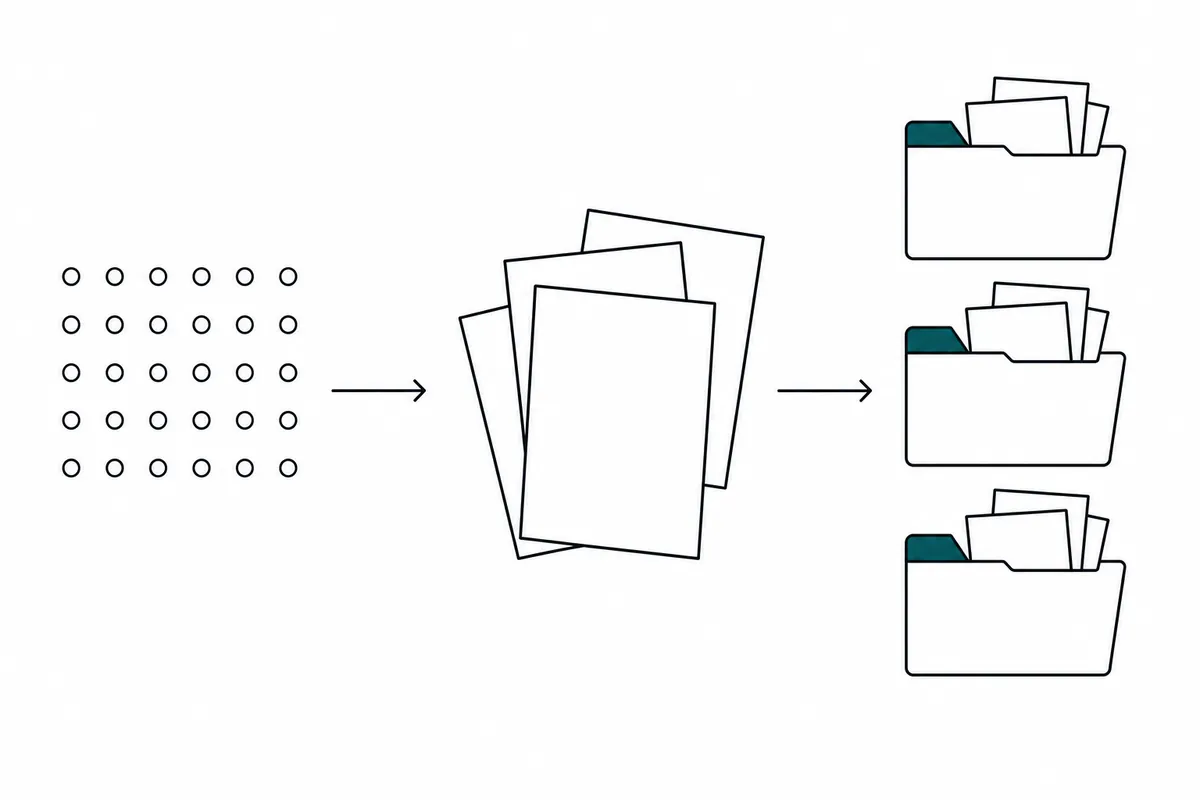
A manuscript may document a candidate theorem, a proposed proof, or an extension of an existing result. Several manuscripts may also belong to the same family. These categories cannot be treated as interchangeable measures of scientific progress.
Dividing 722 by approximately 4,000 would not yield a meaningful success rate without a clear definition of a successful problem, a mapping from problems to manuscripts, and a consistent review process. The supplied material does not provide those foundations.
The useful questions are more demanding: is the result new, is the proof correct, can another researcher reproduce the reasoning, and how much work does verification require? A smaller number of valuable, independently checked results could matter more than a large stack of unreviewed drafts.
Why mathematics is a useful lens for the GPT-7 discussion#
Mathematics exposes a weakness that polished language can conceal. A proof may sound convincing while omitting a necessary assumption, applying a theorem outside its conditions, or relying on circular reasoning.
The video mentions work related to the Riemann zeta function, special cases of the Hodge conjecture, and problems in computation and optimization. These are intellectually demanding areas. But a result related to a famous conjecture is not equivalent to a solution of the entire conjecture.
Nothing in the supplied material justifies saying that AI has solved the Riemann hypothesis or the full Hodge conjecture. The distinction between a related result, a special case, and a general proof must survive every retelling of the story.
Within that boundary, research exploration remains an interesting signal. A future model might become better at proposing intermediate hypotheses, comparing approaches, and reorganizing a problem after a failed attempt.
Developers will recognize similar demands in debugging a complex program or checking whether an optimization preserves behavior. Mathematical results do not prove coding performance, but both settings test whether a system can sustain and inspect a long chain of reasoning.
What Lean can check—and what still needs human judgment#
The subtitles state that some results include formal proofs in Lean. Lean is a tool for expressing definitions, statements, and proofs in a form that can be checked against an explicit logical framework and its assumptions.
Its value is that part of the review can move beyond whether a written argument merely looks plausible. Missing steps or invalid dependencies may become visible when the argument must satisfy a formal checker.
That is not the same as validating every scientific claim around the proof. Researchers still need to ask whether the formal statement captures the intended problem, whether its assumptions are appropriate, and whether the result is novel and important.
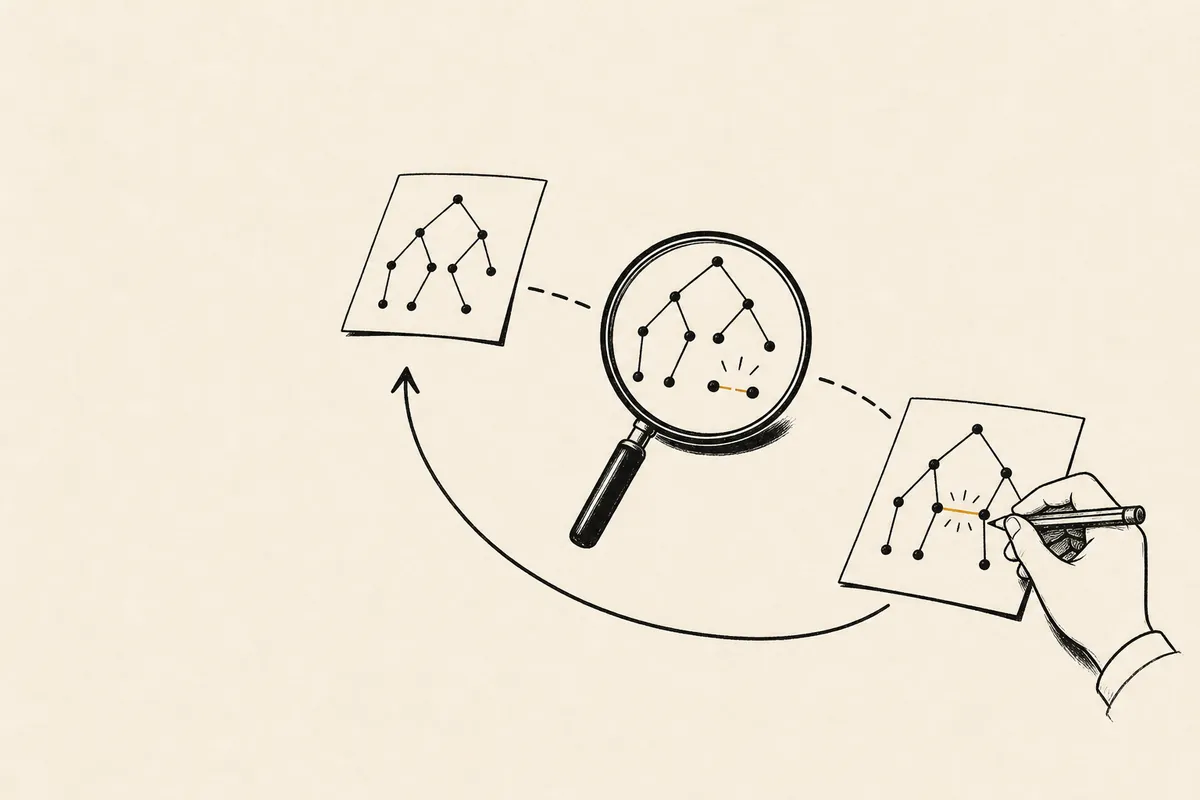
A sensible workflow connects these different kinds of work:
Research question
  → Candidate approach proposed by the model
  → Explicit definitions, assumptions, and reasoning
  → Formal checking where appropriate
  → Independent review of correctness and novelty
  → Further research or practical use
The video’s reference to some formalized results does not establish that all 722 manuscripts completed this workflow. It suggests a direction for AI-assisted research, rather than a blanket certificate of correctness.
If this is an early GPT-7 signal, what could change?#
The most practical possibility is broader exploration. A researcher has limited time to pursue competing approaches. A model could help organize related work, propose candidate arguments, search for counterexamples, and inspect intermediate steps.
That division of labor could leave more human attention for choosing important questions and judging the results. It does not require assuming that a model can autonomously complete an entire scientific discovery.
There is also a bottleneck: review. Generating more manuscripts can create more work if their claims are difficult to assess. The relevant measure is the total effort needed for a useful, checked result, including human review—not the number of pages produced per hour.
For a future GPT-7, three concrete improvements would therefore matter: fewer consequential reasoning errors, a process that can be inspected, and the ability to identify and correct mistakes during a long task.
Has GPT-7 been released, and when could developers use it?#
This video and the materials obtained for this article do not establish that GPT-7 has been released. They do not confirm a release date, price, context window, or public API model name either.
The presenter uses GPT-6.5 and GPT-7 as possible interpretations of an unnamed model. Those names describe speculation about a product generation, not an official identification.
Even an impressive internal research system may depend on a particular compute budget, tool environment, or review process. A public product must also address latency, cost, reliability, and whether users can reproduce the useful behavior.
Teams building applications can prepare by keeping representative tasks and clear acceptance criteria. Once a new model becomes available, those artifacts make it possible to test whether it reduces errors, shortens delivery time, or lowers review effort.
For an existing Crazyrouter integration, consult the current OpenAI model catalog, API documentation, and Codex integration guide. These resources describe current integration options; they are not evidence that GPT-7 is available through the service.
FAQ#
Is the unnamed OpenAI model definitely GPT-7?#
No identification can be made from the supplied material. The video presenter suggests GPT-6.5 or GPT-7, but the article treats those names as speculation.
Do 722 manuscripts mean 722 mathematical breakthroughs?#
No. A manuscript is an output document. A breakthrough requires judgments about correctness, novelty, and significance, and several documents may describe related results.
Does the video prove that AI solved the Riemann hypothesis or Hodge conjecture?#
No. Related research and special cases do not establish a generally accepted proof of either full conjecture.
Does a Lean proof remove the need for mathematical review?#
No. Formal checking tests a precisely stated claim under specified assumptions. Whether that statement represents the intended problem, and whether the result matters, still require expert judgment.
Should I change my API setup in anticipation of GPT-7?#
The video alone is not a sound basis for that decision. Keep model switching practical and preserve real evaluation tasks, then assess the official interface and availability when they are known.
Watch for verifiable progress#
GPT-7 is the attention-grabbing name in this story. The substantive issue is whether a future system can contribute useful candidate results, expose enough of its work to be checked, and cooperate effectively with formal tools and independent reviewers.
A large output count cannot establish that shift on its own. Both the eventual product announcement and the evidence from independent verification will matter.
Source and scope: Adapted from the Arabic subtitles of the user-supplied video. Other vendors’ news, advertisements, and subscription appeals have been omitted. The figures of nearly 4,000 problems, 722 manuscripts, and 372 result families are the video’s account, not independently audited research findings. Illustrations are editorial diagrams, not official product artwork or benchmark results.
Updated October 11, 2026.