Anthropic API Billing Explained: How Claude API Charges Work in 2026
A practical guide to Anthropic API billing in 2026: input tokens, output tokens, prompt caching, Claude pricing examples, hidden cost drivers, and ways to reduce API spend.
Model updates, integration guides, pricing breakdowns, and tool workflows for developers and teams.

A practical guide to Anthropic API billing in 2026: input tokens, output tokens, prompt caching, Claude pricing examples, hidden cost drivers, and ways to reduce API spend.

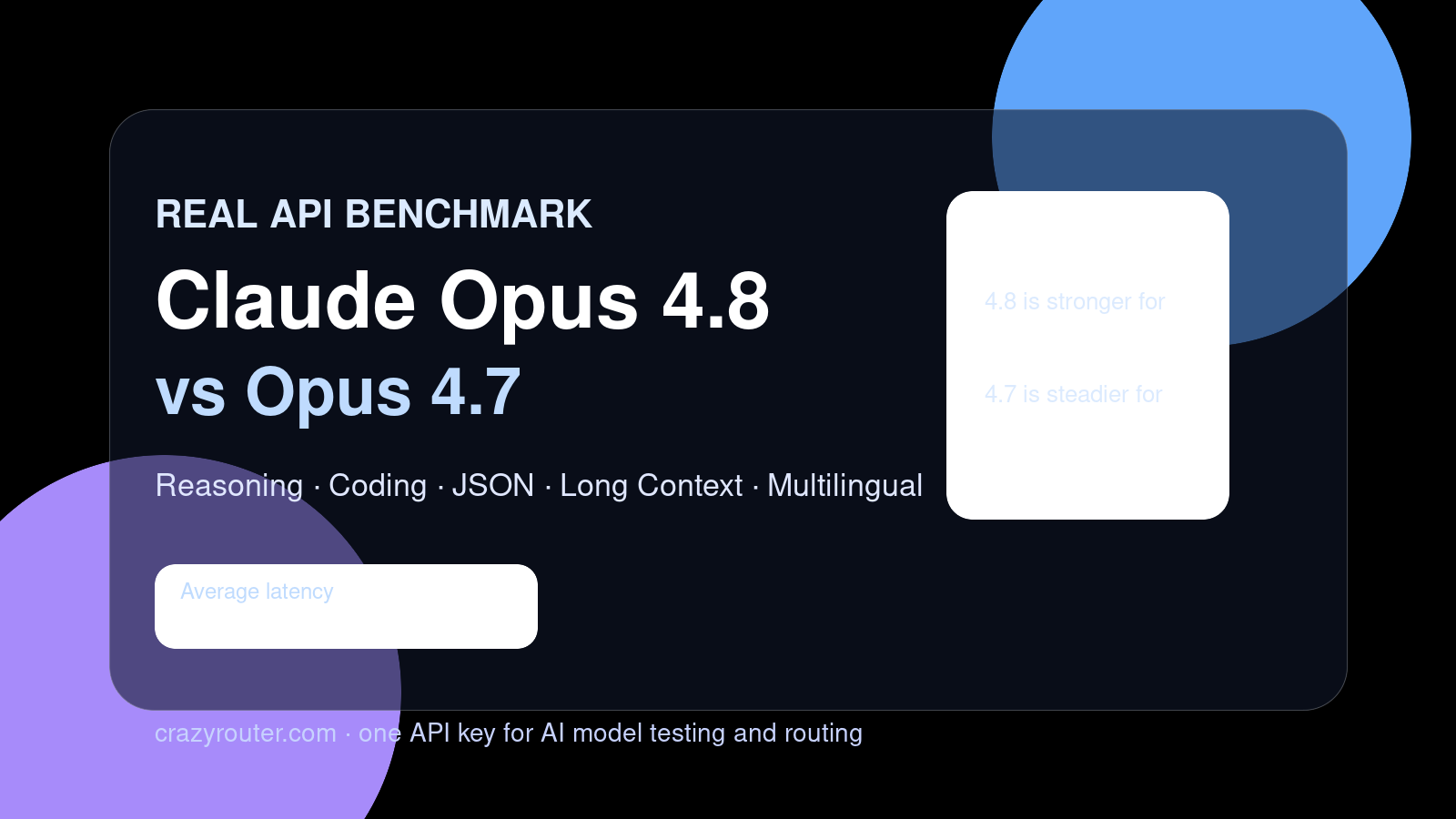
We tested claude-opus-4-8 and claude-opus-4-7 through the Crazyrouter OpenAI-compatible API across reasoning, coding, JSON extraction, long context, tool-use planning, multilingual output, and cost reasoning.

A focused look at the coding benchmark from our Opus 4.8 vs Opus 4.7 API test, including latency, output style, and production routing advice.

Our real API test found Opus 4.7 cleaner than Opus 4.8 for strict JSON-style output, while Opus 4.8 remained strong for reasoning and explanation.

A developer guide to using Gemini 2.5 Flash-Lite as a routing and evaluation layer in RAG and agent systems, with practical metrics beyond cost per token.

How developers can use Gemini 2.5 Flash-Lite to classify support tickets, extract key fields, suggest next actions, and escalate risky cases without turning support into an unreliable chatbot.

A practical guide to where Gemini 2.5 Flash-Lite fits: high-volume classification, extraction, routing, enrichment, and other automation jobs where latency and unit economics matter more than deep reasoning.

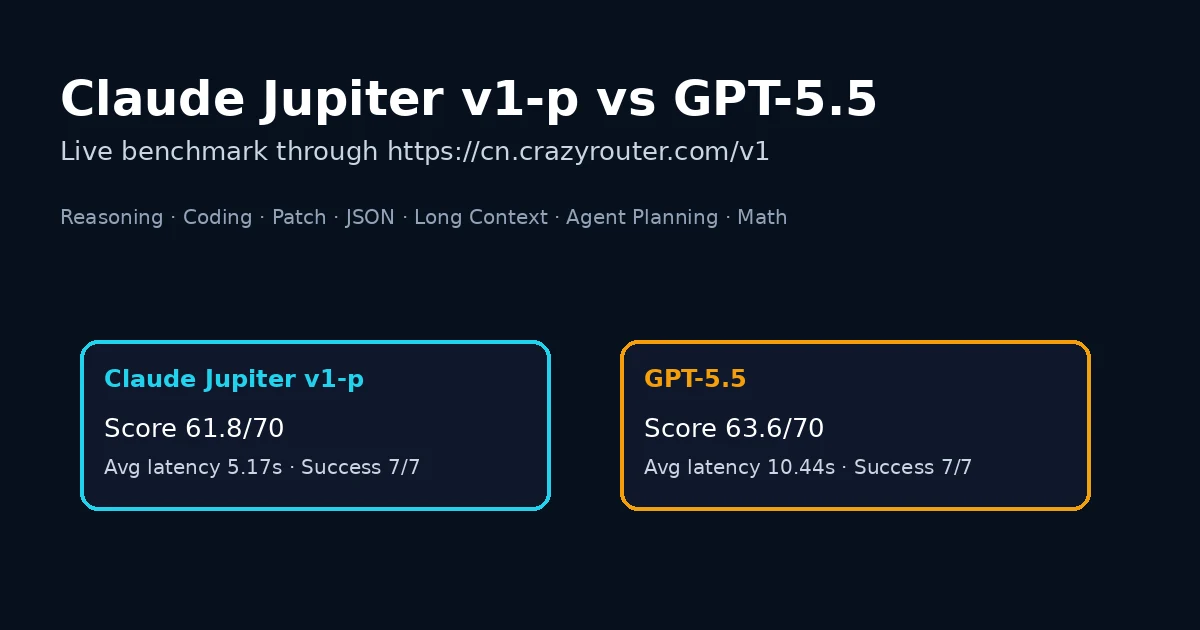
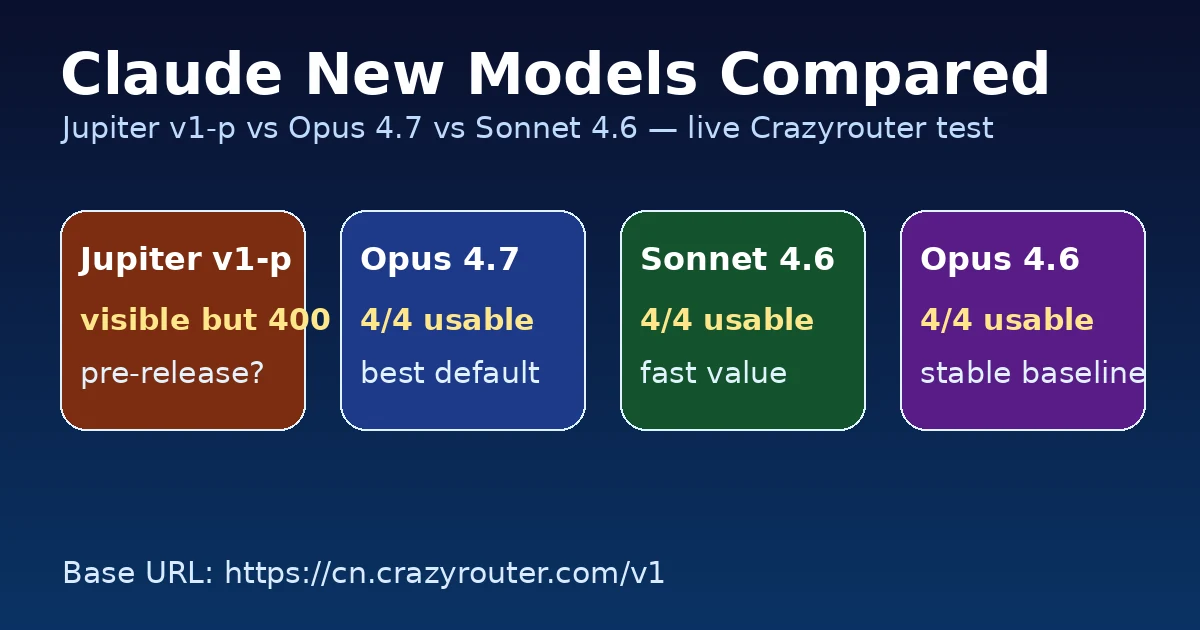
We tested claude-jupiter-v1-p and gpt-5.5 through https://cn.crazyrouter.com/v1 across reasoning, coding, patching, JSON, long-context recall, agent planning, and math tasks. GPT-5.5 scored slightly higher, while Jupiter was much faster but required a payload compatibility fix.