 简体中文
简体中文 繁體中文
繁體中文 English
 Français
 Русский
 日本語
日本語 Tiếng Việt
 한국어
한국어 Deutsch
 Español
 Italiano
 Português
 العربية
 ไทย
ไทย Bahasa Indonesia
 Bahasa Melayu
 Türkçe
 Polski
 Nederlands
 Dansk
Dansk Norsk
Norsk Қазақша
Claude Max Plan 2026: $100 vs $200 Tiers, Usage Limits, and When the API Is Cheaper
Claude Max costs $100 (5x) or $200 (20x) per month. See what each tier includes, how the 5-hour and weekly limits really work, and when pay-as-you-go Claude API access is cheaper.

Short answer: Claude Max costs 200/month (Max 20x). Both give you everything in Claude Pro plus 5x or 20x Pro's usage per rolling five-hour session, higher output limits, Claude Code in the terminal, and first access to new models such as Claude Opus 5.5. There is no annual discount and no team version; Max is an individual plan. If you mainly need Claude inside your own software rather than in the Claude app, pay-as-you-go API access is usually cheaper — the comparison table below shows the break-even points.
Looking for Claude API prices per token? See Claude Opus 5, Claude Sonnet 5, Claude Haiku 4.5, or the Claude API pricing table for every model. This guide is about the Claude Code / Claude.ai subscription plans.
Last updated: September 30, 2026. Prices are from Anthropic's public pricing page; usage capacities are Anthropic's published multipliers plus community reports, because Anthropic does not publish exact token caps for consumer plans.
Claude plans at a glance (September 2026)#
| Plan | Price | Usage per 5-hour session | Who it is for |
|---|---|---|---|
| Free | $0 | Baseline | Trying Claude |
| Pro | 17/mo billed annually) | ≈5x Free | Daily chat, light Claude Code |
| Max 5x | $100/mo | ≈5x Pro | Heavy daily Claude Code / long chats |
| Max 20x | $200/mo | ≈20x Pro | All-day agentic sessions, parallel work |
| Team | 125 per seat/mo | Standard / Premium seat pools | Shared admin and billing |
| Enterprise | Custom | Usage at API rates | Procurement, SSO, compliance |
| API (direct or via Crazyrouter) | Pay per token | No session cap; rate limits by tier | Anything you build in code |
What Claude Max actually includes#
- Everything in Pro: Projects, memory, file uploads, web search, the Claude desktop and mobile apps, and access to the current Claude 5-generation models (Opus 5.5 and Sonnet 5 at the time of writing).
- 5x or 20x Pro's session usage. The multiplier applies to a rolling five-hour window. When the window ends, your allowance refills.
- Higher output limits, which matters for long documents, big refactors, and multi-step tasks Claude runs in the background.
- Claude Code in your terminal under the same subscription, with no separate API key needed.
- Priority access: Max subscribers are first in line for new models and features, and get priority capacity during peak load.
- Extra usage at API rates: if you exhaust the plan you can keep working and pay per token instead of waiting for the reset.
How the usage limits really work#
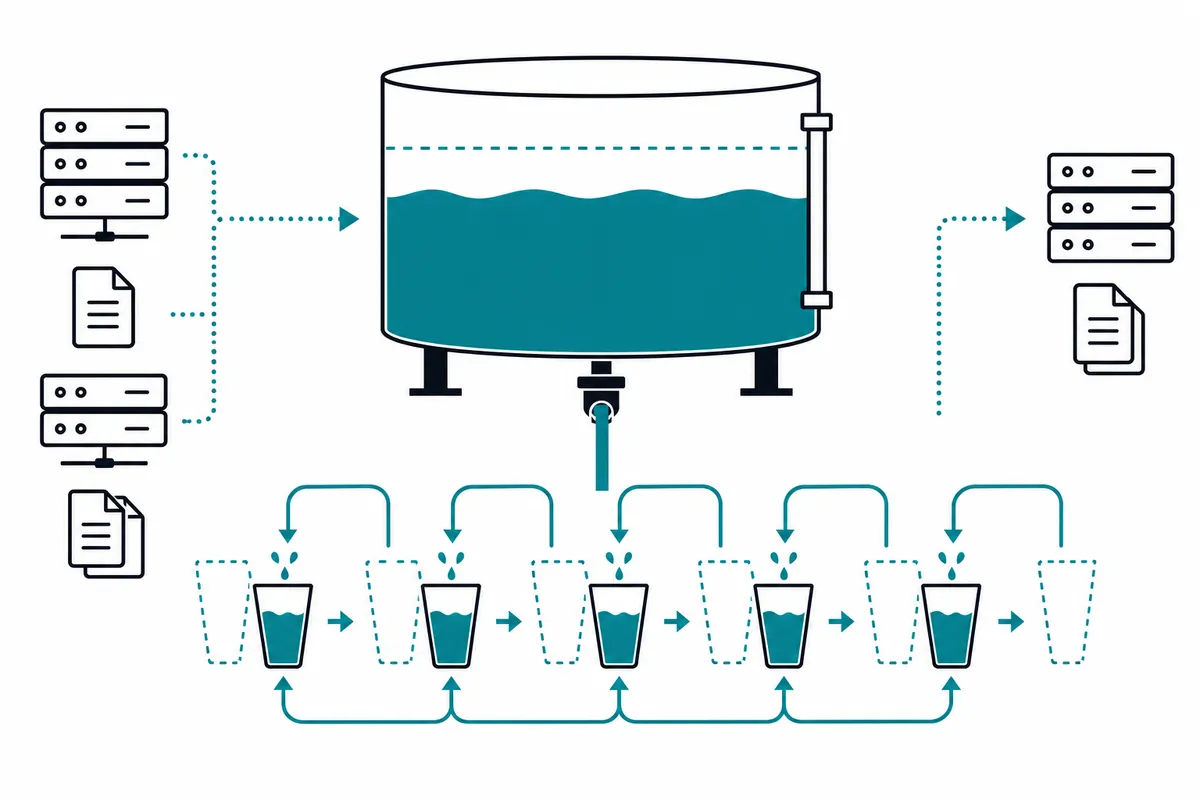
Three mechanisms stack on top of each other, and most complaints about "hitting limits early" come from not knowing about the second and third:
- Five-hour rolling sessions. Your allowance is a bucket that refills five hours after your first message in the window. Pro gets roughly 5x Free, Max gets 5x or 20x Pro.
- A weekly cap that applies across all models and resets at a fixed time assigned to your account. Anthropic introduced it in mid-2025 to curb round-the-clock automation. Community measurements put the weekly Opus ceiling somewhere around 15–35 hours of active Claude Code on Max 5x and roughly 24–40 hours on Max 20x. Treat those as ballpark figures, not guarantees.
- Peak-hour drain. Since March 26, 2026, sessions drain faster on weekdays between 5 am and 11 am Pacific (1 pm–7 pm UK). Weekly limits were left unchanged. If you can schedule heavy agent runs outside that window, you get noticeably more out of the same plan.
The practical consequence: Max 20x costs exactly twice Max 5x, but because the weekly cap does not scale 4x, it is rarely a 4x improvement. Buy 20x only if you are actually running dry on 5x.
Max 5x vs Max 20x: which tier?#
Pick Max 5x ($100) if you hit Pro's limits most days, run Claude Code for a few hours a day, or work on one codebase at a time. For most individual developers this is the tier that removes the friction.
Pick Max 20x ($200) if you run multiple Claude Code sessions in parallel, keep long background tasks going, or routinely burn through Max 5x before lunch. Sustained multi-hour agentic sessions are the 20x use case.
Pick Team if there are several of you. Ten Premium seats cost 2,000 for ten Max 20x plans, and you get central admin and billing.
Claude Max vs the Claude API: a real cost comparison#
Max is a flat fee for using Claude in Anthropic's apps. The API is metered per token and is what you use when Claude runs inside your product, pipeline, or agent. Here are the official API prices for the current models (per million tokens, input / output):
| Model | Input | Output | Notes |
|---|---|---|---|
| Claude Opus 5.5 | $4 | $20 | Released Sept 22, 2026; 1M context, adaptive thinking |
| Claude Opus 5 | $5 | $25 | Previous flagship |
| Claude Sonnet 5 | $2 | $10 | Near-Opus coding at half the price |
| Claude Fable 5.1 | $10 | $50 | Most capable GA model, for the hardest agentic work |
Cached input costs about a tenth of the fresh input price, which is why long coding sessions that reuse the same repository context are much cheaper than the headline numbers suggest.
What 200 buys on the API instead:
| Monthly budget | Sonnet 5 (10:1 input:output) | Opus 5.5 (10:1 input:output) |
|---|---|---|
| $100 | ≈33M input + 3.3M output tokens | ≈17M input + 1.7M output tokens |
| $200 | ≈67M input + 6.7M output tokens | ≈33M input + 3.3M output tokens |
Rules of thumb that hold up in practice:
- Under about 10–15M tokens a month of mostly Sonnet work, the API is cheaper than Max 5x. Above that, Max's flat fee starts winning if the work fits inside Anthropic's apps and Claude Code.
- If you need Claude in code — customer-facing features, batch jobs, evaluation pipelines, CI — Max does not apply at all. It has no API key. You need API access either way.
- Bursty usage favors the API. Max's five-hour and weekly buckets punish spikes; the API just bills them.
You can get the same Claude models through Crazyrouter with one OpenAI-compatible key, pay-as-you-go top-ups (card, Alipay, WeChat Pay), and no monthly commitment. Current per-token prices are on the Claude Opus 5 and Claude Sonnet 5 pricing pages.
Using Claude via API instead of (or alongside) Max#
The OpenAI SDK works unchanged; only the base URL, key, and model name differ.
from openai import OpenAI

client = OpenAI(
    api_key="your-crazyrouter-api-key",
    base_url="https://api.crazyrouter.com/v1",
)

response = client.chat.completions.create(
    model="claude-sonnet-5",
    messages=[{"role": "user", "content": "Refactor this function for readability: ..."}],
    max_tokens=4096,
)
print(response.choices[0].message.content)
curl https://api.crazyrouter.com/v1/chat/completions \
  -H "Authorization: Bearer your-crazyrouter-api-key" \
  -H "Content-Type: application/json" \
  -d '{"model": "claude-opus-5", "messages": [{"role": "user", "content": "Explain async/await in Python"}], "max_tokens": 1024}'
If what you really want is Claude Code without the subscription cap, point it at an API key instead: the Claude Code integration guide covers the two environment variables and the model names.
Is Claude Max worth it in 2026?#
Yes, if you live in the Claude app or Claude Code for hours a day, you want one predictable bill, and your usage is steady rather than spiky. Max 5x at $100 is the value tier; 20x is for people who measurably exhaust it.
No, if you primarily need Claude inside software you are building, your usage swings month to month, you want to mix Claude with GPT-6 or Gemini in the same workflow, or you are buying for a team (Team seats are cheaper and manageable).
Frequently asked questions#
Does Claude Max include API access? No. Max covers the Claude apps and Claude Code only. API access is a separate, prepaid account — or a gateway such as Crazyrouter.
Is there an annual discount on Max? No. Pro has one ($17/month billed yearly); Max is monthly only.
What happens when I hit the limit? You see a reset countdown for the five-hour session, or a weekly reset time if you hit the weekly cap. Pro and Max users can also enable extra usage, billed at API rates, to keep going.
Do Max 5x and Max 20x get different models? No. Both tiers get the same models, including Opus 5.5. The difference is capacity.
Can I share Max with my team? No. Max is per person. Use Claude Team for shared seats, or the API for shared programmatic access with per-key budgets.
Can I run Claude Code on the API instead of Max? Yes. Claude Code accepts an API key and base URL via environment variables, so you can use metered billing with no session caps. See the setup guide.
Summary#
Claude Max is the right buy for heavy, steady, app-based use: 200 only if you demonstrably run out. For anything that lives in code, or for spiky workloads, per-token API pricing wins — and with Opus 5.5 at 20 and Sonnet 5 at 10 per million tokens, $100 of API credit goes a long way.
→ See current Claude API prices on Crazyrouter · Create a free account