 简体中文
简体中文 繁體中文
繁體中文 English
 Français
 Русский
 日本語
日本語 Tiếng Việt
 한국어
한국어 Deutsch
 Español
 Italiano
 Português
 العربية
 ไทย
ไทย Bahasa Indonesia
 Bahasa Melayu
 Türkçe
 Polski
 Nederlands
 Dansk
Dansk Norsk
Norsk Қазақша
Google Veo3 API Guide 2026: Prompting, Cost Control, and Production Video Queues
A production-minded Veo3 API guide for video generation apps: prompts, queues, retries, moderation, and routing strategy.
Google Veo3 API Guide 2026: Prompting, Cost Control, and Production Video Queues#
Developers searching for Google Veo3 API guide usually need more than a surface-level answer. You need to know what Veo3 video generation is good at, how it compares with alternatives, how to connect it to real code, and how pricing behaves once a prototype becomes a scheduled job, CI workflow, or customer-facing feature. This guide focuses on practical decisions rather than hype.
1. What is Google Veo3 API?#
Google Veo3 API is the decision layer around Veo3 video generation: capability, access, integration, cost, and operational risk. For a solo developer, the question may be “can this help me ship faster?” For an engineering team, the better question is “can this workflow run repeatedly with predictable quality, latency, and spend?”
The most common mistake is evaluating a model from a single impressive demo. A production evaluation should include easy requests, adversarial requests, long-context requests, and boring repetitive requests. Boring tasks reveal the real economics because they run every day: pull request summaries, customer support drafts, data extraction, test generation, video batch jobs, or multilingual content review.
2. Google Veo3 API vs alternatives#
The main alternatives are Runway, Pika, Luma Ray 2, Seedance, Wan Animate. Direct vendor access is simple when you only need one provider. A subscription is convenient when humans are in the loop. A unified API becomes more useful when your application needs fallbacks, cost routing, regional availability, or model A/B tests.
| Option | Best for | Watch out for |
|---|---|---|
| Official product | Manual workflows and first-party UX | Harder to automate and compare at scale |
| Direct API | Clean production integration | Separate keys, invoices, limits, and SDK behavior |
| Crazyrouter | Multi-model routing with one OpenAI-compatible API | You still need quality tests and budget rules |
Use a simple rule: if one person is experimenting, use the official UI. If software is making repeated calls, measure API behavior. If the workflow is business-critical, design a fallback path before the first outage.
3. How to use Google Veo3 API with code examples#
Most developer teams should keep the application interface boring. OpenAI-compatible requests are easy to test locally, easy to move between providers, and easy to wrap with logging. With Crazyrouter, the same client pattern can route to many models without rewriting business logic.
Python example:
from openai import OpenAI

client = OpenAI(
    api_key="CRAZYROUTER_API_KEY",
    base_url="https://crazyrouter.com/v1"
)

response = client.chat.completions.create(
    model="auto",  # replace with your preferred model id
    messages=[
        {"role": "system", "content": "You are a concise production assistant."},
        {"role": "user", "content": "Create a test plan for this workflow."}
    ],
    temperature=0.3,
)
print(response.choices[0].message.content)
Node.js example:
import OpenAI from "openai";

const client = new OpenAI({
  apiKey: process.env.CRAZYROUTER_API_KEY,
  baseURL: "https://crazyrouter.com/v1"
});

const completion = await client.chat.completions.create({
  model: "auto",
  messages: [
    { role: "system", content: "Return production-ready JSON." },
    { role: "user", content: "Compare three model choices for this job." }
  ]
});
console.log(completion.choices[0].message.content);
cURL smoke test:
curl https://crazyrouter.com/v1/chat/completions \
  -H "Authorization: Bearer $CRAZYROUTER_API_KEY" \
  -H "Content-Type: application/json" \
  -d '{
    "model": "auto",
    "messages": [{"role":"user","content":"Summarize the tradeoffs."}]
  }'
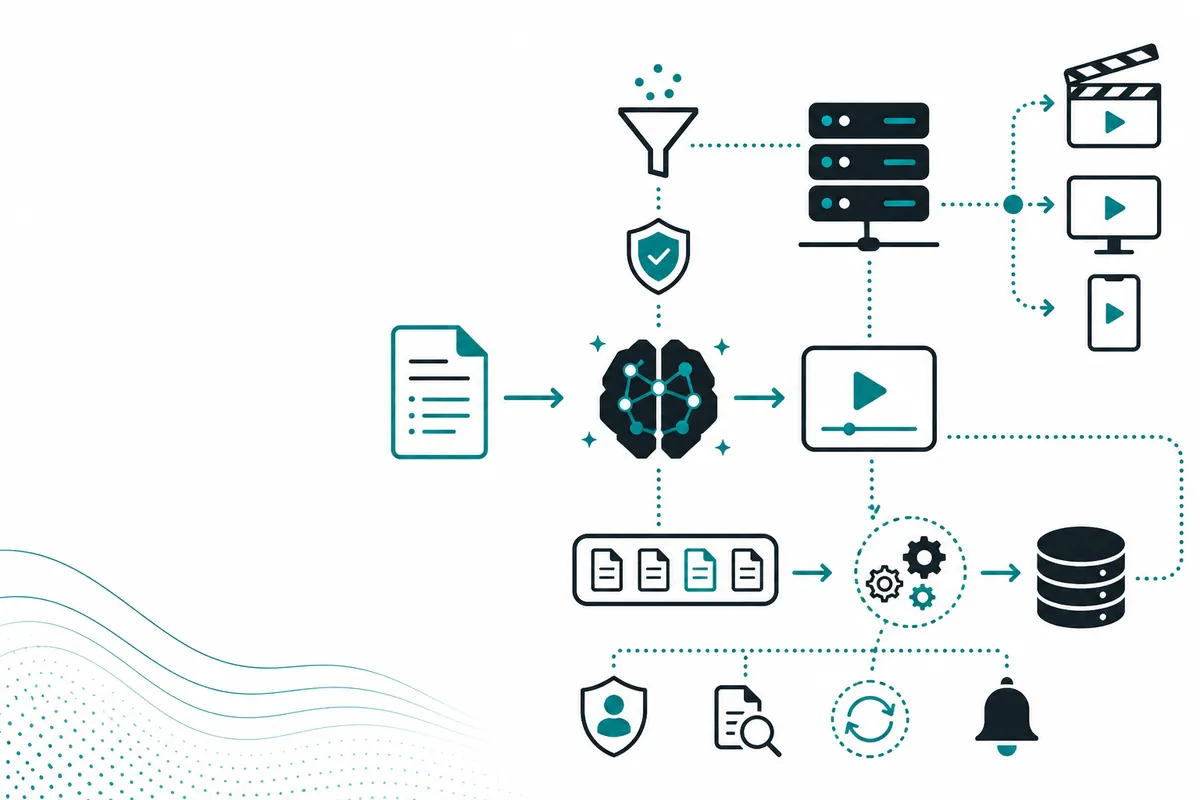
For production, add four layers around these calls. First, set timeouts and retries by task type. Second, log prompt size, completion size, model, latency, and error code. Third, define fallback models for 429, 5xx, and quality failures. Fourth, keep API keys in a secret manager; never ship them in browser JavaScript or mobile clients.
4. Pricing breakdown: official vs Crazyrouter#
Pricing is not only the published token or subscription price. The true cost includes failed generations, retries, human review, queue time, and engineering time spent maintaining separate integrations.
| Provider path | Pricing model | Practical note |
|---|---|---|
| Official Veo3 access | Provider-specific pricing | Best for direct Google-first teams |
| Video API marketplace | Varies by model | Good for experimentation but can fragment billing |
| Crazyrouter | Unified video model access | Useful for testing Veo3 alternatives and cost-based fallback |
A useful benchmark is 100 real tasks from your product backlog. Run them through the official option, one strong alternative, and one cheaper fallback. Track acceptance rate, average latency, average cost, and number of manual fixes. If the cheaper model needs twice as many retries, it may not be cheaper. If the premium model succeeds on the first try for high-value tasks, route only those tasks to it.
Crazyrouter is helpful because it lets you keep one integration while changing the model selection policy. For example, summarize logs with a low-cost model, escalate hard debugging requests to a stronger model, and retry provider failures through a compatible alternative.
5. FAQ#
Is Google Veo3 API worth it for developers?#
It is worth testing if your workload matches ad creatives, product explainers, storyboards, social clips, and batch video generation. It is not worth adopting blindly without measuring cost, latency, and failure modes on your own tasks.
Should I use the official API or a router?#
Use the official API when you are committed to one vendor and need first-party features immediately. Use a router when you want model choice, easier fallback, or centralized cost control.
Can I switch models without rewriting code?#
Usually yes if your app uses an OpenAI-compatible abstraction and avoids provider-specific assumptions. Keep model IDs in configuration, not hard-coded across the codebase.
What should I log for AI API calls?#
Log request type, model, token counts, latency, status code, retry count, estimated cost, and user-visible outcome. Avoid logging raw sensitive prompts unless you have explicit data handling approval.
How does Crazyrouter fit into this workflow?#
Crazyrouter provides one API key and one OpenAI-compatible endpoint for many models, making it easier to compare providers, control costs, and reduce vendor lock-in.
6. Summary#
The best approach to Google Veo3 API guide is not to ask which product is universally best. Ask which path gives your application the best cost-quality-latency tradeoff. Start with a small benchmark, keep the API layer portable, and add fallback before you need it. If you want a faster way to test multiple models behind one endpoint, try Crazyrouter.